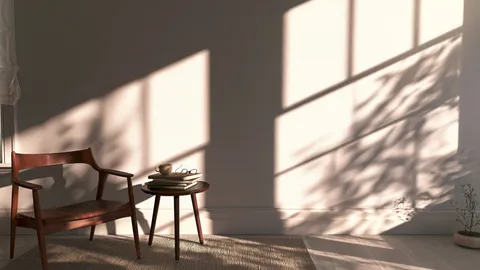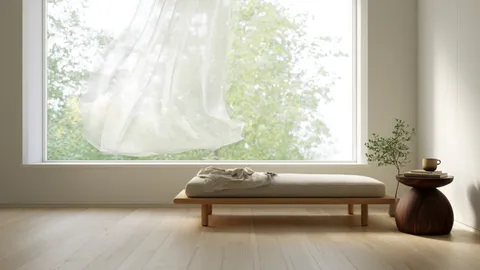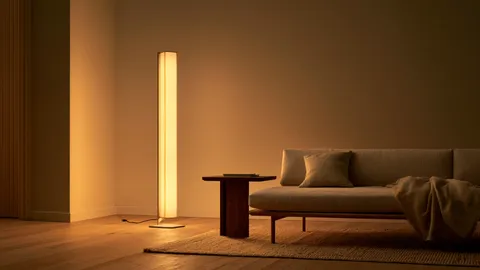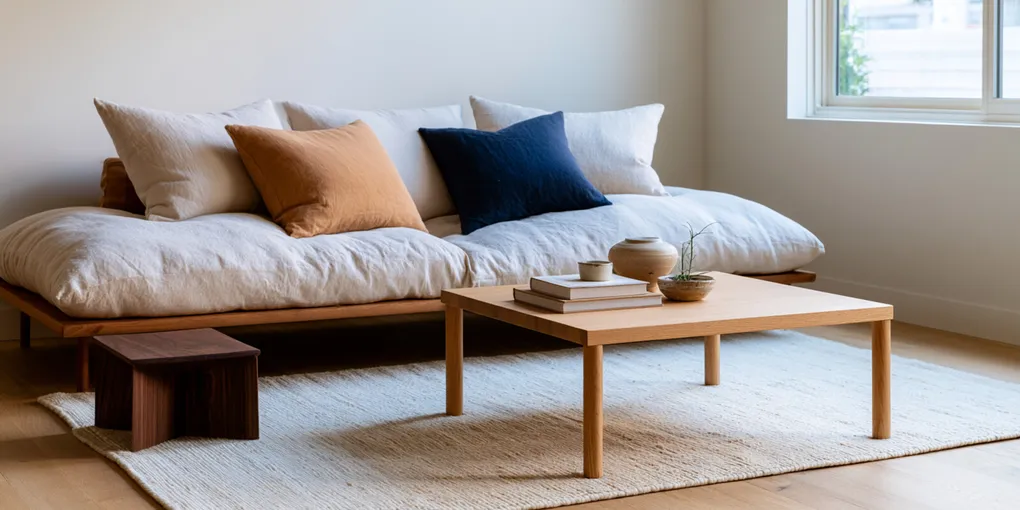
You have walked into a house that did everything right and felt like nothing. Beautiful floors, the correct furniture, a color on the walls that someone clearly chose with care — and standing in the middle of it, you felt oddly like a visitor in a place no one quite lived. And you have walked into somewhere plainer, even a little worn, and felt, almost before you were through the door, that you could stay for hours.
Most people cannot say why. They will call the second place “cozy,” or say it had “good energy,” and then change the subject, because the words run out fast. But the difference is real, it is the same difference every time, and it is the reason this whole site exists.
The difference is never in what you can see.
A Home Is Not What It Looks Like
We judge a house with our eyes. We glance, and we decide. But think honestly about what actually makes a place feel like home, and you will find that almost none of it is visible at all.
A room has a temperature you feel before you have chosen a chair — and a home wants warmth with something to push against, not one flat, even heat spread over every corner.
A room has a sound, even when no one is speaking — and a home is quiet in a way you can actually hear, soft to the ear rather than merely silent.
A room has a smell that belongs to it — and a home comes by that smell honestly, from air moving through it, not from a bottle plugged into the wall.
A room meets your body first at the floor — and a home is one you can come down toward, one your bare feet are willing to trust.
And the sense we reach for to judge all of this — the eye — turns out to be the one that can feel none of it.
A house is what it looks like. A home is everything the photograph left out.
Why We Forget
We forget these layers for a simple reason: only one of them survives a photograph.
A picture can carry how a room looks and nothing else. It cannot carry the temperature, or the sound, or the smell, or the give of the floor. So the rooms we fall in love with, we mostly fall in love with in pictures — and, without ever deciding to, we start building our own rooms for the way they would look in one. Then we move in, try to live inside the picture, and cannot understand why it feels like sitting in a display.
This is not a failure of taste. It is a failure of the medium we borrow our taste from. The camera was never able to see the parts of a home that matter most, so we stopped designing for them — not because we stopped caring, but because they never showed up in the frame to remind us they were missing.
The Test That Costs Nothing
The good news hidden in all of this is that the invisible layers are not expensive. Warmth, quiet, clean air, a floor you can sit on, a little shadow to rest your eyes in — none of it is bought so much as noticed. And you already own the only instrument you need to find them, which is your own body.
So here is the whole method, in one motion. Walk into your home and, just once, do not look. Stand still at the doorway and close your eyes. Then ask what you notice — how the air feels on your skin, what the room sounds like, what it smells of, what is under your feet. The senses the eye has been talking over will answer at once, and in ten seconds they will tell you more about your home than a year of looking at it ever has.
Whatever they tell you — that is the real room. The rest was only ever the photograph.
Five Ways In
This site is, underneath everything else, an attempt to give those layers their words back — one at a time. If you are new here, these five essays are its spine. Read them in any order; they are all, in the end, circling the same idea.
- The Coldest House I Ever Loved — on warmth, and why it means nothing without a cold to cross.
- The Quietest Room Was Never Silent — on quiet as a softness the room adds, not a silence it takes away.
- The Cleanest House Had a Smell — on scent as something a house does, once you stop sealing it and let the day through.
- The Floor Was the First to Know Me — on the body meeting the house at the ground, and why we settle when we come down to it.
- The Eye Was the Last to Know — on why the sense we trust most is the one a photograph can fool.
Beyond the Five
The five senses are where this starts, not where it ends. A home has other invisible layers a photograph still cannot hold — ones that belong to no single sense, but that the body reads all the same. These essays follow them out past the five, and the list will keep growing.
- The Best-Lit Room Lost the Day — on time, and how a home keeps the hour in light and shadow rather than a clock.
- The Oldest House Had the Freshest Air — on moving air, and the difference between a room that breathes and one that only sits still.
- The Most Private Room Had No Walls — on boundary, and the thresholds you feel in your body without a door to open.
- The Heaviest Things Are the Last to Leave — on weight, and why the things you keep are the ones your hands can feel are real.
What This Has to Do With Japandi
People arrive here looking for what Japandi actually is — the wood tones, the calm, the pale rooms with one ceramic bowl. All of that is real, and worth learning. But the reason the Japanese side of it has held on for so long is not the look. It is that the tradition it comes from never believed a room was only its surface. It designed for shadow, for the feel of paper and wood, for the air and the season and the quiet — for exactly the layers a photograph cannot hold.
That is what this site is really about. The Japandi aesthetic is one beautiful way in. The invisible layers are the reason it works.
The First Breath
Go back, now, to the house that looked perfect and felt like nothing. You can finally name what was wrong with it: every visible layer was present, and every invisible one had been left out. The plain room you could have stayed in all afternoon simply had it the other way around.
A home is not something you look at. It is something your whole body agrees to, long before your eyes are asked for an opinion. Learn to feel the layers the camera never caught, and you will know the difference the moment you walk in — in the first breath, from the temperature of the air and the sound of the door closing behind you, while your eyes are still deciding what they think.
They will catch up eventually. They always do. They are just, in every house, the last to know.