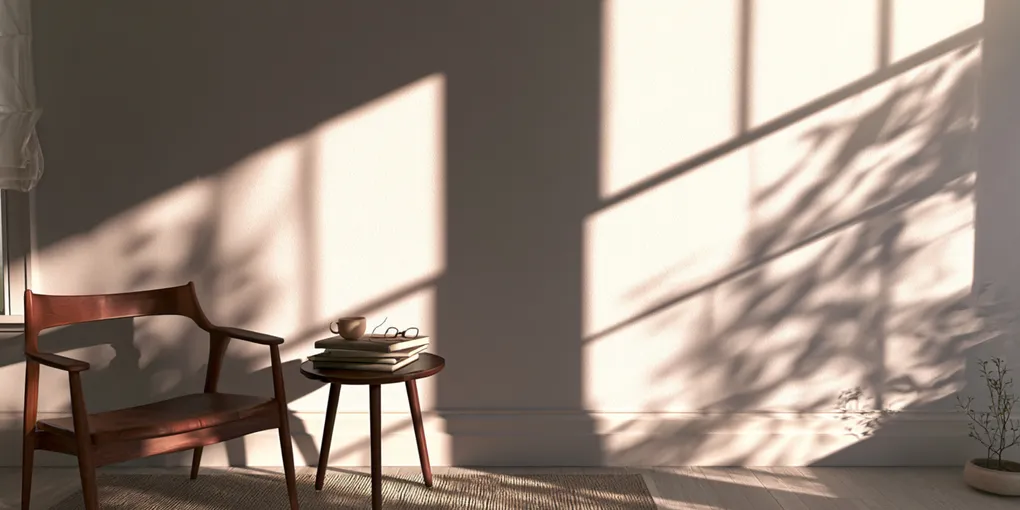
It is a little past four in the afternoon, and I know that without having looked at a clock. I know it because the light on the far wall has gone long and low and the color of weak tea, and the shadow of the window frame has climbed halfway up the paper screen, and the room has the particular held-breath stillness it only takes on in the hour before dusk. I looked up from what I was doing, and the room told me the time. I believed it before it occurred to me to check.
There are rooms that cannot do this. I have sat in them — offices, waiting rooms, a hotel that could have been noon or midnight for all the walls would say. Lit evenly from above, the same at eight in the morning as at eight at night, they hold one flat, tireless brightness that never changes and never means anything. You can spend a whole day inside one and come out unable to say where the day went. The light kept no time. And after a while, sitting there, neither did I.
What I want to write about is how a house keeps time — not with clocks, of which mine has too many, but with light and shadow and the slow swing of a day passing through a room. And how the most convenient thing we ever did to our homes — making them equally, reliably bright at any hour we please — quietly took that away.
The Convenience That Flattened the Day
Let me be fair to the bright room, because it earned its place honestly. We can read at two in the morning, work through the black afternoons of winter, and cross the house at night without breaking a toe. Electric light freed us from the sun’s schedule, and that freedom is real; I am typing this after dark and grateful for the lamp beside me. I am not here to romanticize candles or pretend the old dark was noble. It was mostly just dark.
But we did not only add light where we needed it. We flattened it. We lit every room to one steady working brightness and left it there — the same at breakfast and at midnight, the same in July and in December, the ceiling fixture doing at nine at night exactly what the sun does at noon. And a room lit the same at every hour is a room in which no hour looks like itself. The morning stops arriving. The evening stops falling. The day still passes outside, but inside the house it has stopped showing.
A clock tells you the time. A room lets you feel it — and a house lit the same at every hour has quietly stopped telling you anything at all.
The Time You Feel Without Counting
There is a way of knowing the hour that has nothing to do with reading it. You look up from a book and it is somehow later than you thought — and you knew that a half-second before you found a clock to confirm it. The light coming in had turned. The shadows had swung around and lengthened. The room had cooled a shade and gone quiet the way rooms do toward evening. You did not calculate any of it. Something in you had simply been keeping pace with the day.
I won’t pretend to know exactly how we do this. I think it has something to do with light and warmth and some older rhythm we carry underneath the newer one. But I know the feeling of a home that lets it happen, and the feeling of one that doesn’t. In a house where the light changes, evening finds you whether or not you were watching the time — your shoulders come down a little, you slow, you reach without deciding to for the smaller lamp. In a house held at one brightness, none of that arrives on its own. You have to be told it is late, by a phone or a number, and by then you have usually stayed up too long, because nothing in the room ever suggested you stop.
This is the same thing, in another sense, that a house says through its warmth. The cold house that heated a single room let you feel where you were in space; a house that lets its light move lets you feel where you are in the day. Both are the body reading the room instead of a screen — the sense the eye talks over, quietly getting it right.
The Paper That Told the Hour
The houses I grew up around used paper where we now use glass and blackout curtains. Shoji — wood-framed screens of white paper — do something plate glass cannot. They take whatever the day is doing outside and hand it to the room as light, without letting you see through to the source. In the morning the paper goes cool and bright. By late afternoon it warms and dims and glows the tea color I began with. At dusk it holds the last of the light a while after the windows themselves have given up.
The screen is a clock you read with the whole room. It does not tell you the minute. It tells you the hour of the day in a language older than minutes.
I am not suggesting you paper over your windows. But the principle travels, because the point was never the paper. It was that the house had been built to let the day in and let it move — to filter the light rather than seal it out or blast past it — so that the turning of the hours had somewhere to land indoors.
How to Let the Day Back In
Most of this, like most things on this site, is less about buying than about undoing — letting the day do what it already wants to do, instead of overriding it.
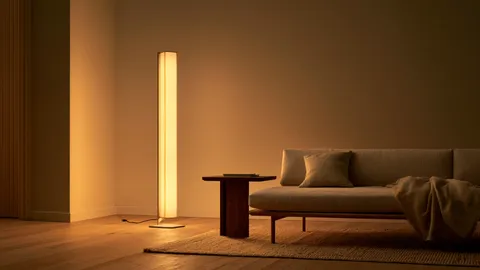
- Stop lighting the evening like the afternoon. This is the whole of it, really: don’t answer the setting sun with the same overhead brightness you used at noon. As the day lowers, let the room lower with it. It is the case for skipping the big light — a low, warm lamp at dusk is not worse light. It is light that agrees with the hour.
- Let the morning in before the screens start. Open something to the actual daylight first thing, and let the room brighten as the day is brightening, rather than snapping the whole house to full in one flick. The day has a slope. Ride it down and up.
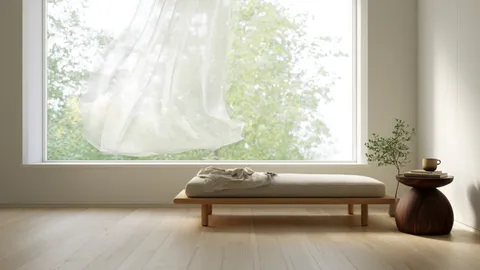
- Filter rather than block. A thin curtain, a paper shade, a rice-paper screen — anything that turns hard daylight into a soft, shifting glow keeps the hour visible on the wall. Black out every window and you have made a room with no time in it at all.
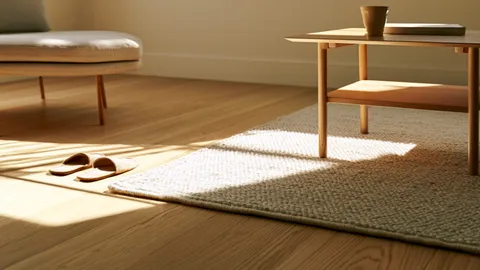
- Let one surface catch the change. Leave a wall, a stretch of floor, a plain shade where the light can land and travel across the day. You want somewhere the afternoon is allowed to grow long. The moving shadow is not clutter; it is the day itself, keeping time in the room. It is also, in its way, the empty space that lets the full thing show.
- If a lamp can be dimmed, let it drop with the hour. A switch has two opinions, on and off; a dimmer can follow the sun all the way down. No dimmer, or renting? A second, smaller lamp does the same work — as the evening lowers, turn the bright one off and the low one on, and the room gets quieter the way the hour does.
What the Wall Still Knows
It is later now than when I began writing this. I did not check a clock to learn it; the wall told me, the way it always does — the light gone from tea to amber to very nearly nothing, the room asking in its wordless way whether I had noticed it was evening.
I used to want a home that held its light perfectly steady, so I could do whatever I liked whenever I liked and never be told otherwise. I think now that a house doing that is a house with the day taken out of it: bright, convenient, and strangely timeless in the worst sense of the word — a room you can lose whole hours inside and never feel one of them pass.
A clock keeps the time so that you don’t have to feel it. A home, if you let it, does the opposite. It hands the hour back to your body — in light and shadow and the long slow turn of an afternoon — and asks nothing of you but that you be in the room while it happens.
Let the day move through the house. It has always known the time better than we do.
Part of The Invisible Layers of a Home — a series on the parts of a room you feel before you see.