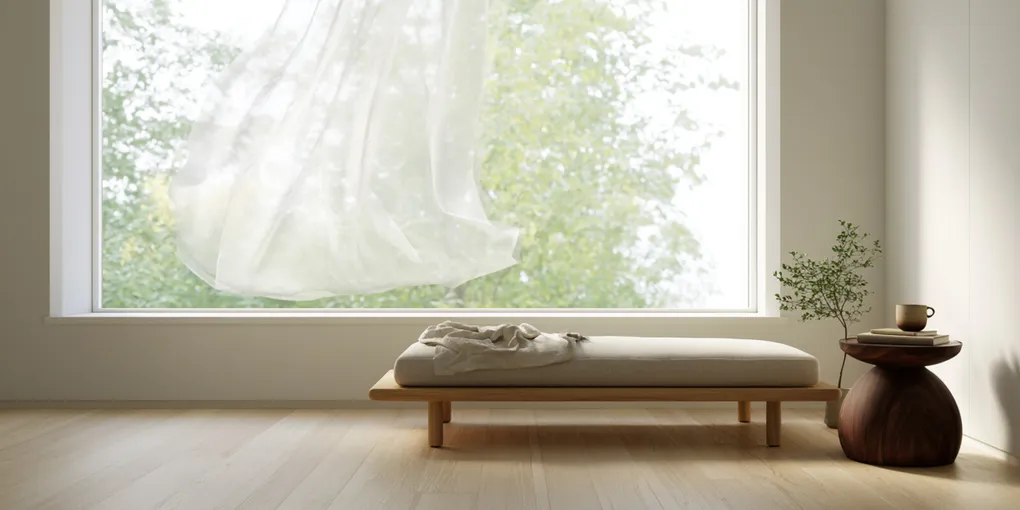
There is a smell a house gives off in the minutes before rain. I am letting it in right now, as I write this — the window slid open a hand’s width, and the room has begun to smell faintly of wet stone and something green, of weather that has not quite arrived.
I did not add anything to make that happen. I opened a window. The smell was already outside, waiting to be let in.
It took me a long time to understand that this — a house that smells of the day it is having — is not something every home does. Some houses smell of nothing at all. And the strange part is that we have been taught to hear the word nothing and think: clean.
The Smell of Nothing
I have never lived in a house closed up tight against the weather, but I understand the design of one. The windows stay shut for months. The air is heated or cooled to a single comfortable temperature and then simply held there, still, going nowhere. It is a real comfort. It is also, in a specific way, dead. The air does not smell bad. It does not smell of anything, because nothing is moving through it to carry a smell in.
That is worth saying plainly, because it is the whole misunderstanding in one line.
A home does not smell of nothing because it is clean. It smells of nothing because nothing is passing through it.
And into that nothing, we pour fragrance. Candles named after pie and cologne, plug-ins refreshed every fifteen minutes by a little machine, sprays that promise a whole season in a bottle. There is nothing wrong with any of it, and I understand the wish underneath — a still room genuinely can feel like it is missing something, and a scent is the fastest way to answer that. I only wonder whether we reach for the bottle before we have noticed what the room already smells like.
Because fragrance cannot replace moving air, any more than perfume can replace breathing. The scent works for an afternoon, then the nose stops noticing, and the answer quietly becomes buy a stronger one.
What a House Actually Smells Of
My house has a smell, and I never once bought it.
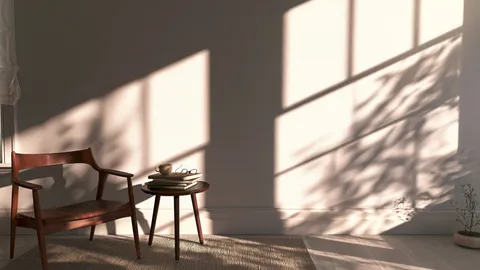
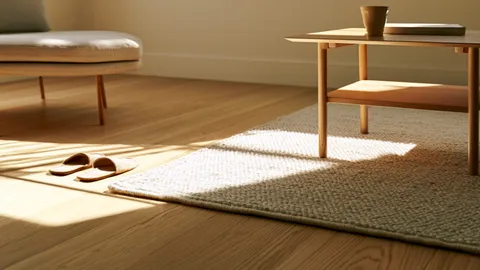
In the afternoon, when the sun comes across the wood, the wood warms and gives off a low, dry, faintly sweet scent that was not there in the morning. Cotton dried outside in that same sun comes back in smelling of warmth itself — there is no other way to say it; sunlight has a smell, and it sinks into cloth and you carry it to bed with you. Rice, at a certain point in the cooking, fills the whole place in a way no candle has ever managed. And the seasons announce themselves through the nose before the eye catches up: the first genuinely cold morning smells different from the last cool one, sharper, higher, like the air has been rinsed.
None of that came from a shop. It came from materials that are alive to the air — wood, paper, cotton, straw — and from a house that is opened and lived in and allowed to be touched by the day. The smell is not decoration laid on top. It is the house being itself, out loud.
This is the same lesson, in a different sense, that a room teaches through its warmth and through its quiet: the good version is never the sealed, uniform, bought-in one. It is the one still in conversation with the world outside the walls.
Smell Is Not Added. It Arrives.
Here is the distinction I wish someone had handed me years ago.
Fragrance is something you add to a room. Smell is something a room does.
You can buy the first one. You cannot buy the second — you can only allow it, by choosing materials that breathe and then letting the outside come through often enough to keep the air moving. A hard plastic surface tends to hold little and give little back; a wooden bowl, a linen curtain, a paper shade, a tatami edge all quietly take in the day and release it slowly. An airtight house full of synthetic surfaces has nothing to smell of even when the windows are open. A breathing house full of natural ones will smell of itself with almost no help from you.
Fragrance sits on top of a room. Smell rises out of it.
The candle is not the enemy, exactly. But reaching for it first is like turning the television up to cover a silence you never actually listened to. Before you add a single scent, it is worth finding out what your house already smells like underneath the one you have been spraying over it. Most of the time there is a real smell down there, faint and honest, waiting to be uncovered rather than replaced.
How to Let a House Breathe
None of this requires buying anything. Most of it is the opposite of buying. Before you buy a candle, open two windows.
- Two windows, not one. A single open window barely stirs the air. Two, on opposite sides of the room, make a path, and the whole house exhales in about five minutes. Do it even in winter — especially in winter, when the sealed months are longest. Five minutes of cold air costs you almost no warmth and gives the house back its smell.
- Take the fake smell away before you add a real one. Unplug the diffuser, put away the wax melt, and live for a few days with whatever is underneath. You are not trying to have no smell. You are trying to hear the one you have been drowning out.
- Let materials that breathe into the room. Wood, cotton, linen, paper, wool, grass. These hold the day and let it go again. This is the same reason they feel warm to the eye — a material honest enough to smell of something is usually honest enough to look calm.
- Dry something in the sun. A blanket, a cushion cover, a set of sheets. Sunlight leaves a smell in cloth that no product convincingly fakes, and it is free every clear morning.
- Wipe the wood with a damp cloth. Much of what a clean Japanese house smells of is not a cleaning product at all — it is water on wood, and then air. Try it once and smell the room afterward.
- If you want a scent, choose one that leaves. A single stick of incense burns, marks the air for a few minutes, and is gone — a passing note, not a fragrance that sits on every surface for a month. The point of it is the trail, not the residue.
This is also, quietly, a mottainai way to live with scent: less bought, less thrown away, the house doing more of the work than the store.
What the Rain Left
The rain has arrived while I was writing this. The room smells of it now — that dark, mineral, green smell that comes up off warm ground when the first drops hit it. It is one of the best smells I know, and I want to be clear about how it got here, because it is the entire point.
I did not buy it. I did not light anything. I did not spray a bottle labeled After the Rain. I opened a window before the weather came, and the house took the smell in on its own, the way a house does when it is not sealed shut against the world.
We think what we are chasing, when we stand in the candle aisle, is a nice smell. It isn’t. What we are chasing is the feeling of a home that is alive — one that knows what day it is, that changes with the hours, that has some relationship with the sky outside. You cannot get that from a jar, because a jar smells the same in July and January and the sky never does.
The cleanest-smelling house I know is not the one that smells of nothing, and it is not the one that smells of pumpkin and cologne. It is the one that smells, very faintly, of the weather it is having. All you have to do to live in a house like that is stop sealing it — and open the window before the rain.
Part of The Invisible Layers of a Home — a series on the parts of a room you feel before you see.