There is a phrase in British English — “the big light” — that refers to the main overhead light in a room. The one switched on by the wall switch at the door. The one that illuminates everything equally and mercilessly, from the ceiling down.
The phrase exists because at some point, everyone has experienced the specific discomfort of someone turning on the big light when the room was otherwise settled into a quieter mood. It is the lighting equivalent of someone raising their voice in a calm conversation.
In most American homes, the big light runs everything. And lighting, more than furniture, is one of the fastest ways the Japanese half of what makes a room Japandi either shows up or quietly goes missing.
Why Overhead Lighting Works Against You
The problem with ceiling lights is biological before it is aesthetic.
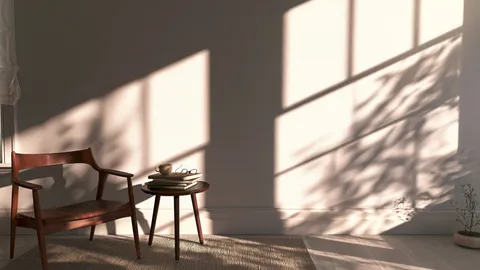
The human brain uses the angle of light as a signal for the time of day. Light that comes from above — like the sun at noon — is the brain’s primary cue for alertness. It suppresses melatonin, raises cortisol, and signals: time to be awake, focused, and productive.
This is useful at 10am. At 8pm, when you are trying to decompress from the day, it is working directly against you.
Overhead recessed lighting in American homes is particularly acute in this regard. Designed for maximum brightness and even coverage, recessed cans flood a room with light that comes from directly above at high intensity. The effect is a room that is very well-lit and very difficult to relax in.
The ceiling light does not know what time it is. Your nervous system does.
The solution is not darkness. It is light from a different direction — lower, warmer, softer, and more varied.
Two Traditions That Understood This
Both Scandinavian and Japanese design arrived at the same conclusion through different routes: that the quality of light in the evening hours determines the quality of rest, and that overhead light is not the right tool for an evening room.
The Scandinavian approach: hygge and candle logic
In Scandinavia, the concept of hygge — the Danish word for a kind of cozy, restorative atmosphere — is inseparable from candlelight and low lamp placement. Nordic homes traditionally use many small light sources distributed around the room rather than one large source above it. Candles on the table, floor lamps in the corners, small table lamps at seated eye level.
The effect is a room where light pools in warm circles rather than covering everything uniformly. The shadows in between the pools of light are part of the design. The room has depth.
The Japanese approach: diffused and directional
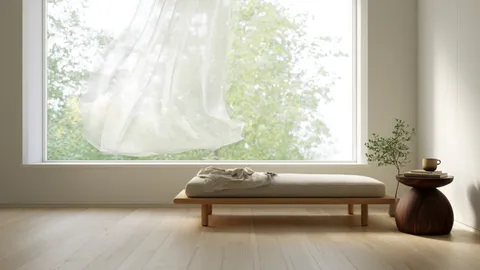
Japanese rooms, particularly traditional ones, have almost no direct light sources. Light enters through shoji screens — panels of washi paper in wooden frames — and is immediately diffused into something soft and non-directional. The light has no single source. It seems to come from the walls themselves.
In contemporary Japanese interiors, the same principle applies: pendant lamps with paper or fabric shades that diffuse rather than project, indirect lighting behind screens or along baseboards, small standing lamps positioned to bounce light off natural surfaces.
The result is a room that glows rather than blazes — one where the light supports calm rather than demanding attention.
The Three-Layer System
The method that works best in an American home draws from both traditions: distributing light across three heights, each with a specific role, using warm-toned bulbs throughout.
Layer one: eye level
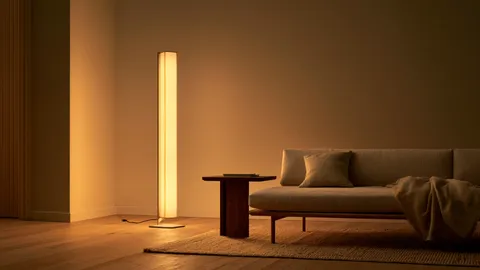
A floor lamp positioned beside the sofa or reading chair, standing at roughly seated eye height, provides the light most useful for the activities of the evening — reading, conversation, relaxed attention. Placed beside seating rather than in the center of the room, it creates a pool of warm light where you actually spend your time.
The shade matters here. A paper shade — washi, rice paper, or a similar material — diffuses the bulb’s light into something soft and evenly distributed. An opaque shade with a downward opening directs the light more precisely, useful for reading. Both work; the choice depends on the mood you want.
Layer two: table height
A table lamp on a console, a sideboard, a bookshelf, or the dining table brings light to a middle level and anchors it to specific surfaces. In a Japandi room, table lamps are often positioned near wood or ceramic objects, so that the warm light reflects off natural textures and fills the room with secondary warmth.
A single candle on a wooden table achieves the same effect in its smallest form. The candlelight catches the grain of the wood, the glaze of a ceramic bowl, the weave of a linen cloth — and each of these surfaces becomes a secondary light source.
Layer three: near the floor
The lowest layer is the most unexpected and often the most effective. A small lamp on a low surface — a bedside table close to the floor, a flame candle on a stone tray, a subtle LED strip along a bookshelf’s base — adds light from below the normal sightline.
Low light draws the eye downward and simultaneously makes the ceiling recede. In a room where everything is lit from the ceiling, the eye stays at ceiling level and the room feels large and exposed. When light sources are distributed low as well as high, the ceiling fades into shadow and the room becomes proportionally smaller and more contained — which, in the evening, is exactly what you want.
Low light lowers the ceiling. And a lower ceiling, in the evening, makes a room feel held rather than exposed.
The Color Temperature Question
This is where many people go wrong even after they have the right lamps in the right positions.
Light bulbs are measured in Kelvin — a scale that describes the warmth or coolness of the light they produce. Daylight bulbs run at 5000 to 6500K: bright, blue-white light that mimics noon sun. Warm white bulbs run at 2700 to 3000K: the light of incandescent bulbs, resembling a very bright candle. Extra-warm bulbs and Edison-style filament bulbs go down to 2200K: deep amber, the color of firelight or the last hour of sundown.
For an evening room — especially a Japandi room where the aesthetic goal is warmth and calm — the right range is 2200K to 2700K throughout.
At 2700K, wood becomes richer. Linen becomes warmer. Natural materials that look flat under cool light develop depth and texture under warm light. At 2200K, the room shifts into something that feels genuinely restorative — close to the quality of light that both Japanese shoji screens and Scandinavian candlelight were designed to create.
Most standard LED bulbs sold in American stores default to 3000K or 4000K — bright white, slightly cool. Check the packaging before buying. The difference between a 4000K and a 2400K bulb in the same lamp is the difference between a room that is merely well-lit and one that feels like the end of the day should feel.
The Practical Transition
You do not need to rewire your home. The overhead lights can stay — they are useful for cleaning, for active tasks, for bright moments that require full illumination. The goal is not to eliminate them but to stop defaulting to them in the evening.
The simplest version of this transition:
Buy two lamps. One floor lamp for beside your main seating, one smaller table lamp for elsewhere in the room. Both with 2400K bulbs.
In the evening, switch those on first. Before reaching for the overhead. See if the room is adequately lit for what you’re doing. In most cases, it will be.
Reserve the overhead for functional tasks. Cooking, cleaning, looking for something you’ve dropped. Not for sitting, not for watching something, not for the quiet hours of the evening.
The change in how the room feels — and how you feel in the room — is usually noticeable within the first few evenings. Not because anything about the space has changed, but because the light is finally telling your nervous system the truth about what time it is.
On Washi Paper Lamps
A note on the specific lamp style most associated with Japandi interiors: the paper pendant or floor lamp, particularly designs inspired by the traditional Japanese akari (明かり — meaning “light” or “luminescence”).
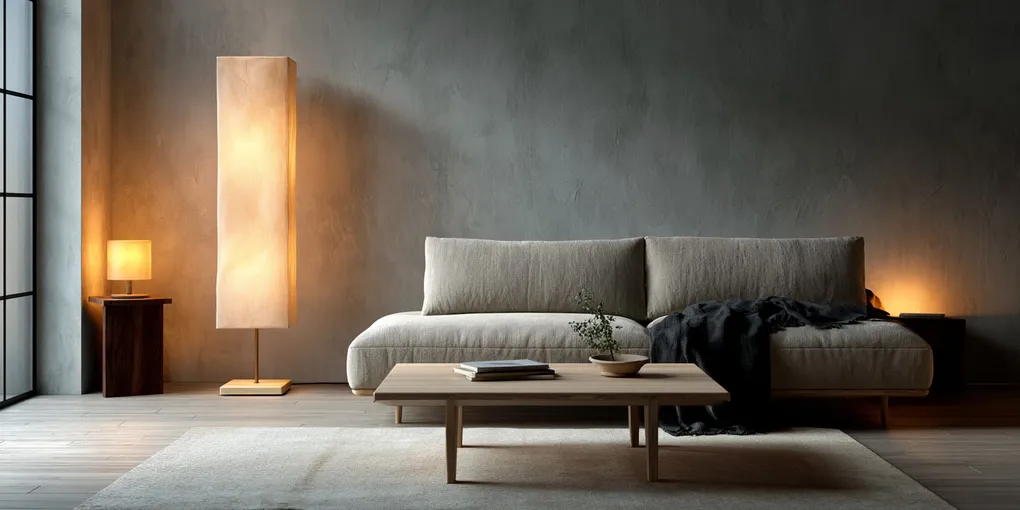
These lamps work in a Japandi room not because they are Japanese decorative objects, but because they do something specific with light that almost no other lamp design does: they diffuse it completely. The light source disappears inside the paper shade, and what remains is a soft, directionless glow that resembles natural light filtered through a shoji screen.
Placed at eye level or table height in a room otherwise using warm bulbs and natural materials, a washi paper lamp achieves almost exactly the quality of light that Japanese rooms have relied on for centuries — without requiring any traditional architecture to support it.
That transferability is the point. The principle — light diffused through paper, emanating softly, casting no hard shadows — works in any room. The material does the work. The room does the rest.