I should be honest about something before I write another word about Japandi.
I don’t think of it as my culture. “Japandi” is a word made mostly outside Japan, a marriage of Scandinavian and Japanese design arranged by people who loved both. And I will go further: I’m not even certain I fully understand the Japanese half — 和, wa — the way a scholar or a craftsman would. I grew up inside it, not studying it.
So by any fair measure, I am not the expert in the room.
And yet. Show me a space someone has called “Japandi,” and I can feel the seam almost instantly — the place where the Scandinavian ends and the Japanese is reaching to begin — long before I could tell you why. That feeling is, honestly, the only real expertise I have here. It’s also the one thing I have never been able to hand anyone as a rule. This essay is me trying to work out where it comes from.
What the Seam Feels Like
It is not analysis. It is faster than analysis.
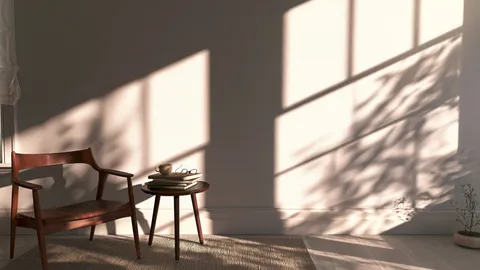
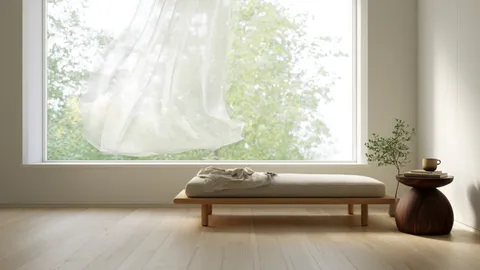
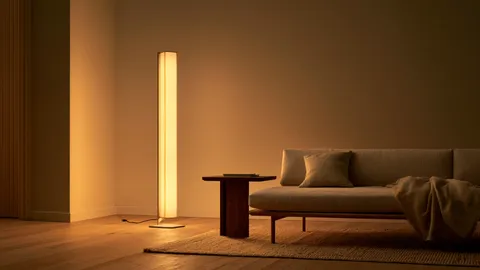
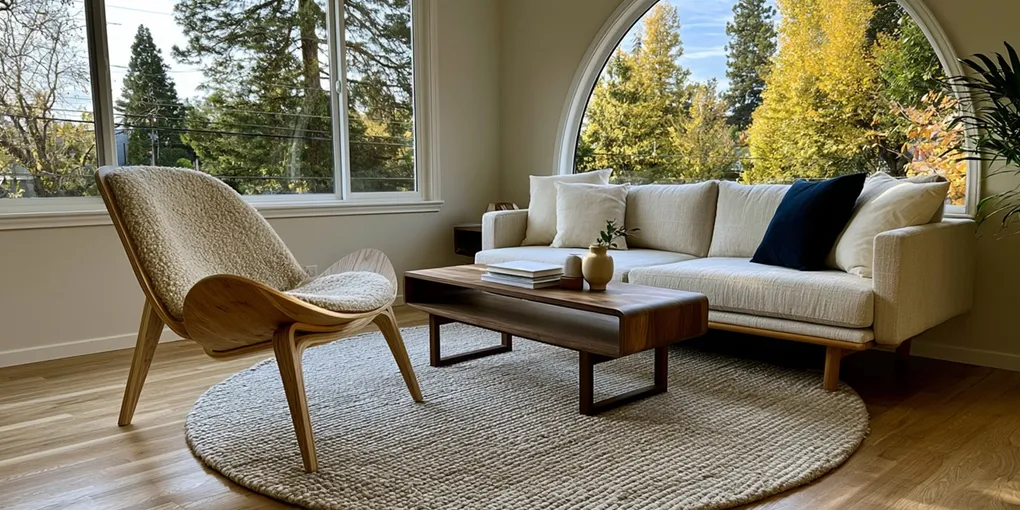
I look at a room and certain things settle immediately. That chair is Scandinavian — you would know it too; the world has been taught to read that vocabulary. That low table is reaching for something Japanese. And then, often, one object sits in the room slightly wrong — not ugly, not cheap, just somehow wearing a costume. It doesn’t belong to either family. It is doing an impression.
I can’t always say what gives it away. The feeling arrives before the reason does.
The closest comparison I have is hearing an accent in a language you don’t speak. You can’t translate a single word, but you know — instantly, with strange confidence — which region that voice grew up in. You’re not reading the grammar. You’re hearing something older than grammar. That’s what a room does to me. I’m not reading the design. I’m hearing where each thing is from.
The Half I Can Read, and the Half I Feel
Here is the part worth being precise about, because it’s where my honesty has to come in.
The Scandinavian half is legible to almost everyone now. It has been exported so thoroughly — the pale woods, the soft curves, the careful plainness — that a person who has never been near Denmark can still recognize its accent. There’s no special insight in reading it. I read it the same way you do.
It’s the Japanese half where I feel something I’m not sure I can pass on. Not because I’ve studied it more than a designer in London or New York. I almost certainly haven’t. It’s only that I soaked in it before I had words — the proportion of a room, the weight of a quiet object, the difference between plainness that is empty and plainness that is full. I can’t cite it. I can only feel when it’s right and feel when it’s faked.
So I won’t pretend this is authority. It isn’t. It’s closer to a native ear than a credential.
My Unprovable Theory
Now the question I actually wanted to answer: why would growing up in Japan give a person this particular ear — the ability to feel which things belong together and which are strangers?
I have a theory. I can’t prove it, and I want to be clear that it’s mine, not a fact.
Japan has spent a very long time taking in things that were not originally its own — writing, religion, architecture, and later a whole wave of Western everything. Some of it was absorbed so completely that no one thinks of it as foreign now. Some stayed visibly a guest. And much of it got quietly reshaped until it became a third thing, neither the original nor a rejection of it.
A culture that has mixed that much, for that many centuries, gets very good at one particular perception: telling kin from stranger. Not by name — most people couldn’t tell you the history of any of it — but by feel. You grow up with things made ours and things still visibly theirs, side by side, and without trying you develop an ear for the difference.
It’s like growing up in a house where two languages are spoken at once. You may not be able to parse the grammar of either. But you always know, instantly, which language a sentence is in.
That, I suspect, is what I’m using when I feel the seam in a Japandi room. Not knowledge of Japanese design. A childhood spent watching foreign and familiar things share a shelf, and learning — before I could name any of it — which ones recognized each other.
The Question Everyone Asks Is the Wrong One
People who want a Japandi home usually ask me some version of: is this piece authentically Japanese?
I understand the question. But I think it’s the wrong one, and my whole instinct rebels against it.
Authenticity is a label. It lives on the object’s passport — where it was made, by whom, in what tradition. And a room can be full of “authentic” objects that have nothing to say to one another. I have seen genuinely Japanese pieces sit in a space like polite strangers at a party, each correct, none connected. I have also seen a Scandinavian oak chair sit in a room of Japanese things like a cousin who simply belongs there.
The seam I feel is not “Japanese versus not-Japanese.” It is closer to these things know each other versus this one doesn’t.
A good room is a family, not a checklist. The pieces share something underneath their labels — a restraint, a respect for the material they’re made of, a willingness to be quiet — and that shared grammar is what lets a Danish chair and a Japanese table become relatives instead of co-workers. If you’d like the longer argument for why the two traditions are even able to do this, I wrote about it in whether Japandi is just Scandinavian design. But the short version is the one your eye already knows: kinship is felt, not certified.
The Japan in My Writing Is My Japan
One more confession, because it matters for how you read everything on this site.
When I write “Japanese” here, I am not handing down a verdict for a country of a hundred and twenty million people. I’m translating a feeling — my feeling, shaped by one childhood, one family, one set of rooms. It is a version of Japan, not the index of it.
I think that’s actually the honest way to do this. I’m not trying to teach you Japan. I’m showing you what one person who grew up inside it happens to notice — and trusting that the noticing is useful even when the credential is missing. The most truthful thing I can offer isn’t expertise. It’s an ear, and a willingness to admit where it ends.
How to Borrow the Ear
You don’t have to grow up in Japan to develop some of this. The ear isn’t really about Japan. It’s about learning to feel kinship between objects instead of collecting them by label. A few ways to practice:
- Stop asking “is this Japanese enough?” Ask “does this belong with the others?” Put a piece in the room and feel whether it joins the conversation or interrupts it. The room will tell you faster than any rule.
- Find the one object that doesn’t know the others. Most rooms that feel slightly off have a single stranger in them — a piece that’s correct on paper and mute in practice. Take it out for a week. Notice whether the room relaxes into a family without it.
- Choose for shared grammar, not shared origin. A Danish chair and a Japanese table can be relatives if they share restraint, natural material, and quiet. Two “authentically Japanese” objects can be strangers if one is loud and one is still. Match the underlying manners, not the passport. (This is also why mixing light and dark woods works when the proportion is right — they’re speaking the same language at different volumes.)
- Trust the feeling that arrives before the reason. If a room feels subtly wrong and you can’t say why, don’t overrule it because you can’t explain it. The seam is real even when the words are missing.
What I Can and Can’t Give You
The teachable things, I’ve tried to teach honestly — the proportions, the materials, the way the light should fall. Those you can learn from anyone willing to be precise.
What I can’t quite give you is the ear — the half-second in which a room tells you whether its objects are kin or strangers. I’m still not sure I can prove I have it, or explain why a childhood in Japan handed it to me rather than a textbook.
But maybe that uncertainty is the most useful thing on this whole site. Because it means the goal was never to make your home authentically Japanese. The goal is quieter and harder and entirely yours: to build a room where nothing feels like a stranger.
If you’re wondering where to begin, here’s the only instruction I trust: don’t start with “Japanese furniture.” Start with one object that already feels at home — a chair you’ve loved for years, a table you’d never give up — and let the room gather around it, one kindred piece at a time.
I can’t certify that for you. Nobody can. You’ll know it the way I do — not by checking the labels, but by walking in, and feeling the room recognize itself.