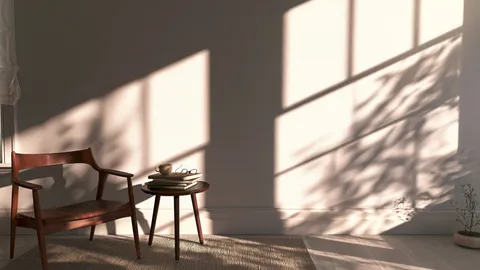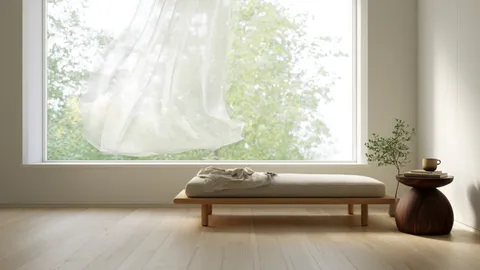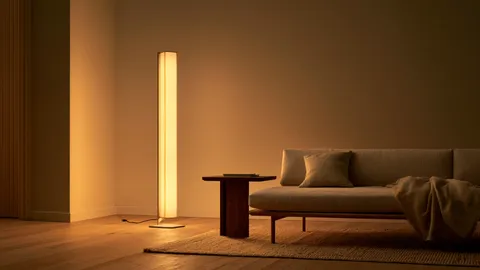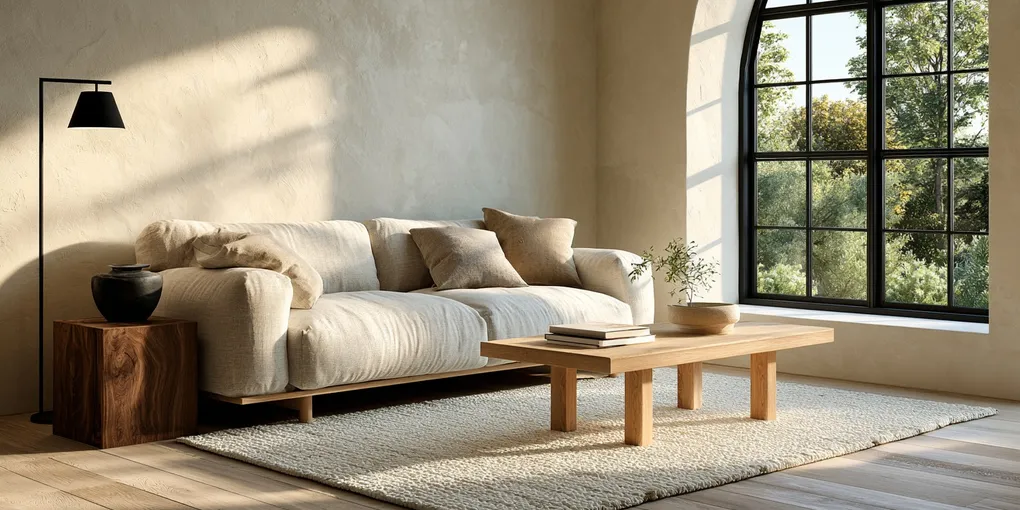
I’ll be honest with you right away: when I first started seeing “Japandi” appear all over Pinterest, my reaction as someone who grew up in Japan was — wait, isn’t this just Scandinavian design?
The pale oak floors. The white walls. The clean lines. The linen textiles.
That’s not a Japanese room. That’s Copenhagen.
Japandi is about 80% Scandinavian. And the 20% that’s Japanese is the part that changes how the room feels.
So if your instinct was the same as mine, you were right. But that remaining 20% matters more than you might think. (For the whole picture — the colors, the woods, the light, and the empty space — here is what Japandi actually is.)
Why Scandinavian and Japanese Design Merged in the First Place
The two styles don’t just look similar by accident. They share a surprisingly deep common ground:
Both cultures value restraint over decoration. Both prefer natural materials — wood, linen, stone — over synthetic ones. Both believe that a well-made, functional object is more beautiful than a merely ornamental one.
When Scandinavian designers began looking eastward for inspiration in the late 20th century, they found something familiar in Japanese aesthetics — but quieter. More grounded. Less cheerful, in the best possible way.
That’s where Japandi was born. Not in Japan. In the conversation between two cultures that already understood each other.
What Makes It Scandinavian
If you look at a Japandi room and feel like you’ve seen it in an IKEA catalog, you’re not wrong. The bones are Nordic:
- Light-toned wood floors and furniture (white oak, ash, birch)
- Walls in white, cream, or warm off-white
- Soft textiles — linen, wool, cotton
- Furniture with tapered legs and organic curves
- Lots of natural light
This is the foundation. Japandi doesn’t replace it. It edits it.
What Makes It Japanese
Here is where I want to be specific, because this is the part that most Japandi guides get wrong.
The Japanese edit is not about adding Japanese decorations — a bamboo plant, a shoji screen, a paper lantern. It’s about subtracting certain things from the Scandinavian base, and replacing them with something quieter.
The Color Subtraction
True Scandinavian design is actually quite colorful. Think of the bold reds and blues of traditional Nordic folk art, or the bright mustard yellows and aqua blues of Marimekko. Scandinavian interiors often use these colors as accents — cheerful, warm, and deliberately bright to counter the long dark winters.
Japandi removes those accents entirely.
No aqua. No yellow. No pastels.
In their place: charcoal, deep forest green, and the warm amber of low light. The palette becomes heavier at the bottom, darker at the edges. It feels less like a bright morning and more like late afternoon in autumn.
The Japanese edit isn’t adding things. It’s knowing exactly what to take away.
The Wood Tone Shift
This is something I notice immediately when I compare Japanese interiors to Scandinavian ones.
In Japan, wood tends to be darker — walnut, cedar, lacquered surfaces in deep brown or black. Furniture is lower to the ground and more rectangular in silhouette. There are fewer curves.
Blonde wood with round edges reads as Scandinavian. Dark wood with straight lines reads as Japanese.
Japandi uses both — but in a specific proportion. Roughly 70% lighter wood (the Nordic base) and 30% darker wood (the Japanese anchor). A light oak dining table with dark walnut chairs. A white birch floor with a low, dark-toned coffee table.
The darker elements don’t dominate. They ground.
The Shape Shift
Scandinavian furniture often has rounded corners, tapered legs that flare slightly outward, gentle organic curves. It feels warm and approachable.
Japanese furniture tends toward the rectangular. Sharp corners. Straight lines. Low profiles. The aesthetic isn’t cold — it’s composed.
In Japandi, you balance these: roughly 60% straight lines to 40% curves. Enough softness to feel livable. Enough geometry to feel intentional.
The One Thing That Reveals the Difference
If I had to point to a single thing that separates a Japandi room from a Scandinavian one, it would be this:
The corners.
In a Scandinavian-inspired American home, every corner tends to be filled. A plant in one corner, a floor lamp in another, a decorative ladder against the wall, a basket of throws. The impulse is to make the room feel complete — fully inhabited.
In a Japanese room, one corner is deliberately left empty.
Not because there’s nothing to put there. Because the empty space is doing something. It slows the eye. It gives the room somewhere to rest. It makes everything else in the space feel more considered.
That intentional emptiness — that’s the 20%.
A Simple Way to Check Your Own Room
If you’re looking at your current space and wondering which side of the line it falls on, here’s a quick way to read it:
Stand in the doorway and look at the room. Notice where your eye goes first, and then where it stops.
If it keeps moving — jumping from object to object, corner to corner — the room is reading as Scandinavian (or just busy). If it lands somewhere and rests, if there’s a moment of quiet before it moves again, you’re closer to Japandi.
The Japanese part of Japandi isn’t a collection of objects. It’s a quality of stillness that the objects — and the empty spaces between them — create together.
That’s the part that’s hard to buy. But it’s also the part that’s free.