This post contains affiliate links. As an Amazon Associate, I earn from qualifying purchases.
Listen to a kitchen just before the water boils.
There is a low hum first, then a faint rush, like wind moving through trees far away. In Japanese tea culture that sound has a name — matsukaze, “wind in the pines” — and people have been listening for it for centuries, because it tells you the water is almost, but not quite, ready. It is the sound of waiting made audible.
Most modern kitchens have edited that wait out. Water boils in ninety seconds behind sealed plastic, a light clicks off, and the pause is gone before it ever had a texture. Every other appliance in the kitchen is there to save you time. The kettle is the one that asks you to spend it — and that, to me, is exactly why it deserves to be chosen carefully.
I wrote recently about choosing a smaller cup — the idea that a cup sized for the hand, refilled often, gives a morning its seams. The kettle is the other half of that rhythm. It is the reason you return to the counter, the two quiet minutes you stand there with nothing to optimize. A kettle in a Japandi kitchen isn’t equipment. It’s the metronome.
So this isn’t a list of the fastest boilers on Amazon. It’s five kettles — iron, steel, and enamel — that are honest in their material, quiet in their color, and worth leaving out on the stove where you can see them.
Why Trust This Guide?
I’m Japanese, and I write about Japandi from the cultural side rather than the trend side. This is a design-led curation, not a hands-on performance test: these selections are based on material, form, stated specifications, and how each kettle fits the rhythm of a slow kitchen — not on sponsored placements, popularity lists, or paid recommendations.
At a Glance
| Kettle | Best For |
|---|---|
| Hario Drip Kettle, White (BDK-80-W) | The slow gooseneck pour |
| Yoshikawa Stainless Whistling Kettle | The everyday Japanese workhorse |
| Chantal SVEN Enamel Kettle, White | The soft whistler with a wood handle |
| Made In 2 QT Kettle, Willow Green | One quiet note of moss green |
| Nambu Ironware Tetsubin (Suzumi) | The kettle that becomes a ritual |
What Makes a Kettle Actually Japandi?
Four things decide it for me — and the first one disqualifies most of what’s sold as “aesthetic” kettles.
Material: Real metal, allowed to look like metal. Cast iron, brushed stainless steel, or glass-coated enamel — surfaces that age honestly and sit naturally next to wood and ceramic. Not printed florals, not chrome trying to be a mirror, not a plastic body with a metallic sticker finish.
Color: The Japandi palette holds here too. Iron black, matte steel, soft off-white enamel — or, at most, one deep moss green, one of the few colors the palette allows. One kettle in one quiet tone — the counter around it does the rest.
Shape: Low, grounded, with a spout that pours slowly and deliberately. A slender gooseneck spout — the shape Japanese pour-over culture made standard — turns pouring into a controlled, almost calligraphic motion instead of a splash.
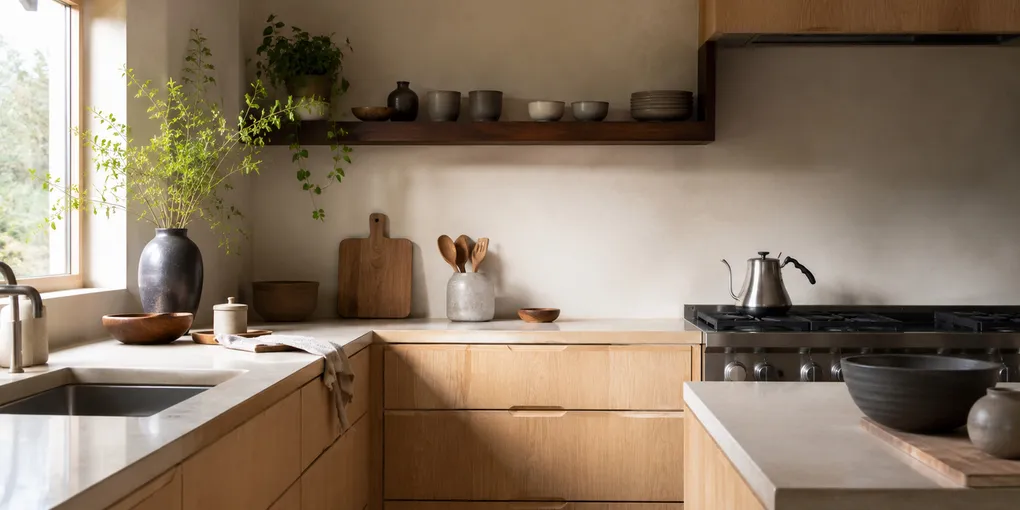
Presence: This is the test people skip. A Japandi kitchen leaves only a few carefully chosen things visible, so each one carries more of the room. A good kettle is the exception you display: it should look right sitting still, cold, at three in the afternoon.
One honest warning before the list: if you fall in love with cast iron, make sure you’re buying a kettle (tetsubin) meant for the stovetop — many cast iron “teapots” sold online are lined with enamel for brewing only and will crack over a burner. I’ll flag which is which below.
The 5 Best Tea Kettles for a Japandi Kitchen
1. Hario Drip Kettle, White (BDK-80-W) — The Slow Gooseneck Pour
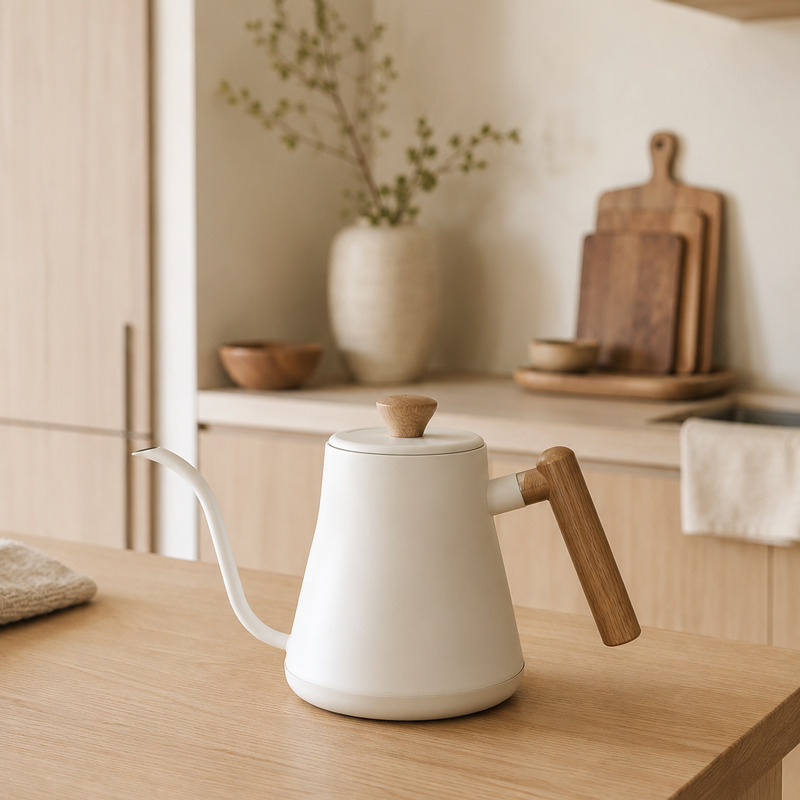
Hario is a Japanese maker best known for its glassware — the name means “king of glass” — and this is one of its most visually restrained kettles.
It’s a small pour-over kettle, around 800 ml, in soft white enamel with a wooden handle, a little wooden knob on the lid, and a slender gooseneck spout drawn out like a brushstroke. The gooseneck is the point: water leaves it in a thin, controlled stream — designed for pour-over coffee, but equally useful whenever you want to add hot water slowly and deliberately. The wood-against-white pairing is the Japandi palette in miniature — a pale surface warmed by natural wood.
What I like: Most gooseneck kettles look like lab equipment; this one looks like it belongs on an open shelf next to ceramic cups. The small capacity is honest, too — sized for one or two pours, not a day’s supply, which is the same logic as a smaller cup.
Who it’s for: Start here if the pour itself is your favorite part of the ritual — and if you want the gentlest price on this list.
2. Yoshikawa Stainless Whistling Kettle — The Everyday Japanese Workhorse
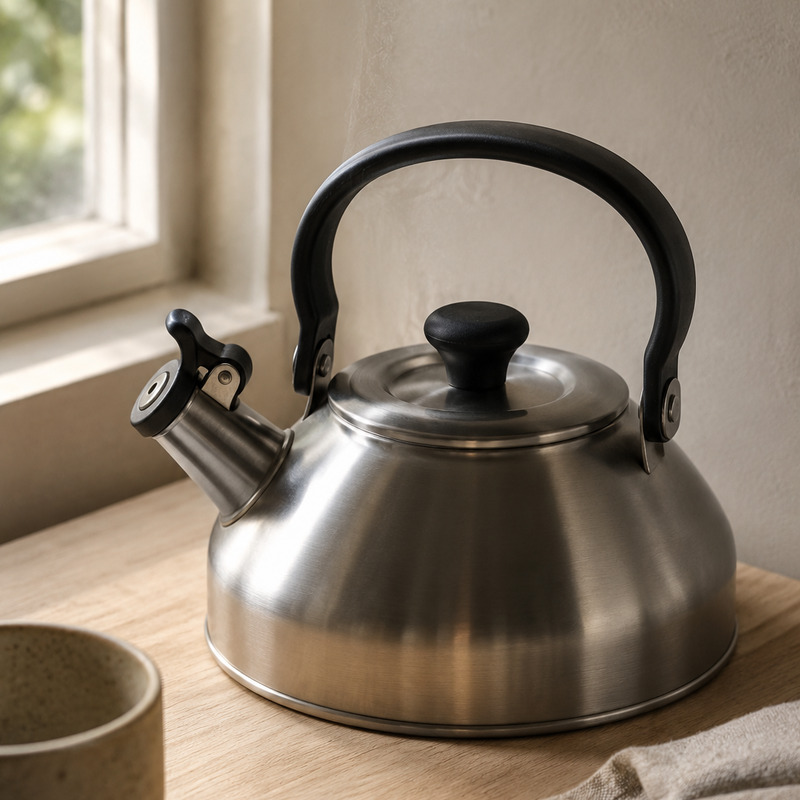
If you walked into an ordinary Japanese kitchen, this is the kind of kettle you’d most likely find on the stove.
Yoshikawa is a Japanese housewares maker, and this kettle is produced in Tsubame, Niigata — a town long associated with stainless metalwork — from 18-8 stainless steel: a wide, low 2.6-liter body with a simple black handle and a whistle. Nothing about it is designed to be photographed, which is exactly why it photographs well: brushed steel, no pattern, no logo you’d notice, a shape that has stayed the same because it works.
What I like: The proportions — low and grounded where Western kettles tend to be tall and upright, the same instinct that makes a Japandi room favor low furniture. And the whistle is the analog version of a notification: the kitchen tells you, so you don’t have to watch.
Who it’s for: For the person who wants one honest, unfussy kettle for everyday volume — the family-size counterpart to the small Hario, and the piece here most likely to simply never be replaced. A natural companion to the mottainai way of buying less.
3. Chantal SVEN Enamel Kettle, White — The Soft Whistler with a Wood Handle
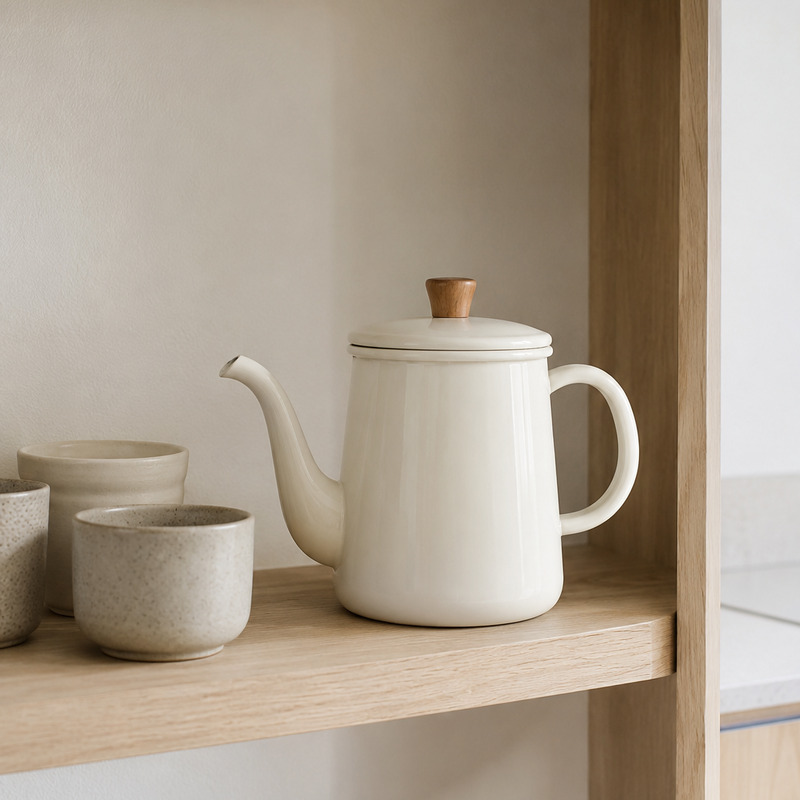
Iron and steel can leave a kitchen reading a little hard. This is the piece that softens it.
The SVEN is enamel-on-steel in white, with a handle and lid knob of pale natural rubberwood, designed to remain comfortable to handle as the water heats. The maker calls the styling Scandinavian, and it is — clean lines, blonde wood, a light body — which makes it the most openly Nordic piece on this list. That’s not a compromise: Japandi is mostly northern light with a Japanese hand on the palette, and this kettle is that ratio made visible. Enamel has been the quiet workhorse of home kitchens for generations — easy to keep clean, gentle in color, fired at high heat so the surface lasts.
What I like: The wood-and-white pairing. Against a dark stovetop or an oak shelf, a white enamel kettle does what a linen cushion does on a wood-framed sofa — it gives the eye one soft place to land. The blonde handle ties it to every other natural material in the room.
Who it’s for: Choose this if your kitchen already leans dark — iron pans, walnut shelves, a black stove — and needs one light, quiet note. It’s also the most openly Nordic piece here — useful when a kitchen wants more softness than statement.
4. Made In 2 QT Kettle, Willow Green — One Quiet Note of Moss Green
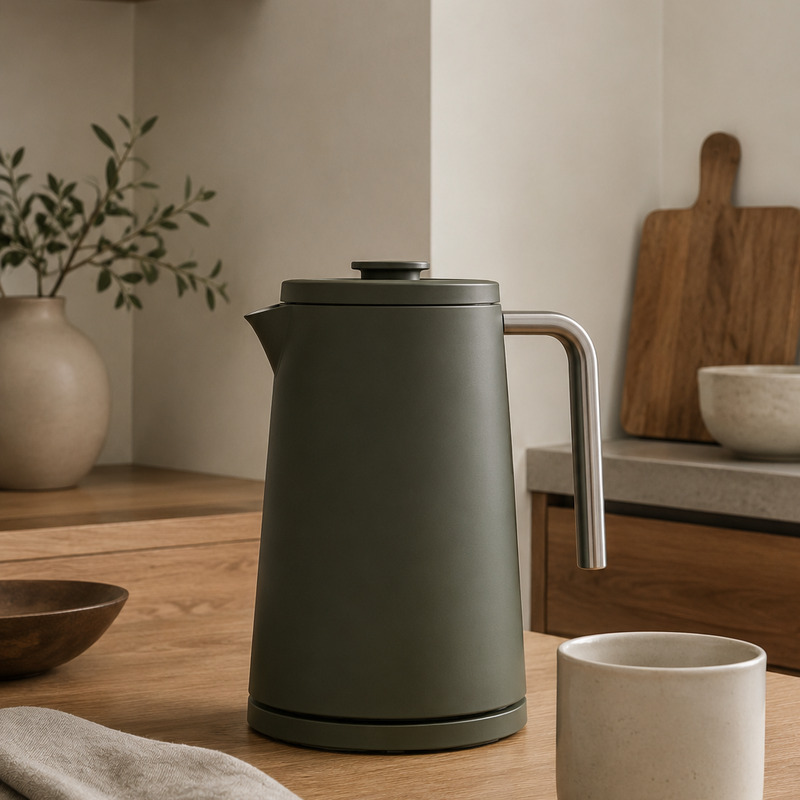
Every other kettle on this list is a neutral. This is where the palette allows exactly one color.
Made In is an American cookware maker, and this two-quart stainless kettle comes in a muted willow green — the deep, grey-leaning green of moss and leaves in shade, one of the few colors that belongs fully in a Japandi kitchen. A built-in temperature gauge sits in the lid, and for tea that’s not a gadget: green tea wants water well below boiling, black tea wants it just at, and a gauge lets you catch the moment without guessing. It whistles too, and comes with a removable sleeve for the handle. The clean drawn-steel body keeps it modern rather than rustic.
What I like: Green is the accent this site trusts most — the color of plants, not packaging — and this shade reads considered rather than bright. The gauge quietly deepens the ritual, too: you start watching for the right temperature instead of treating a full boil as the only signal.
Who it’s for: Reach for this if your kettles and counters are all neutral and the kitchen needs one grounding note of color — or if you drink green tea and want the temperature right without going electric.
5. Nambu Ironware Tetsubin (Suzumi, 1.3 L) — The Kettle That Becomes a Ritual
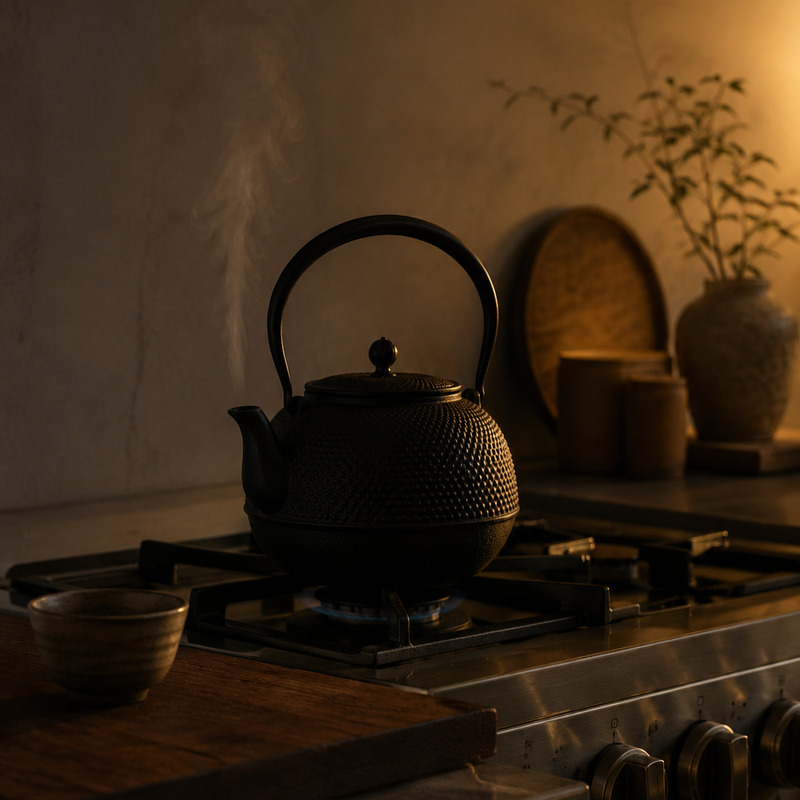
Everything above is a kettle. This is a tetsubin — and the difference is the reason this list ends here.
This one is cast in Iwate prefecture, the home of Nambu ironware, a regional casting tradition that dates back to the mid-seventeenth century. It is a true tetsubin: bare cast iron inside, made to sit over a gas flame, induction, or open fire and boil water — not an enamel-lined teapot for brewing (that distinction from earlier matters most right here; the listing even tells you to boil and discard the first few fills, which is how bare iron is seasoned). The 1.3-liter body carries a hand-textured surface and a high arched handle, and the iron holds heat long after the burner is off. The weight in your hand makes pouring a two-second ceremony.
What I like: It’s the strongest object on this list — the deep, ink-black 30 percent that grounds everything lighter around it. Cast iron also asks for a small habit — emptying and drying it after each use so the iron keeps well. In tea culture that was never considered maintenance; it’s the closing gesture of the ritual, the way rinsing the pot ends the brewing.
Who it’s for: For the slowest version of this whole idea — the person who wants boiling water to have a sound, a weight, and a place in the evening. The premium ritual piece, and the kind of object a kitchen ends up being remembered by.
Which One Should You Choose?
A quick guide:
- The slow gooseneck pour, in soft white: Hario Drip Kettle (BDK-80-W)
- The everyday workhorse you never replace: Yoshikawa Stainless Whistling Kettle
- One soft, light note against iron and wood: Chantal SVEN Enamel, White
- One quiet color, and the right temperature: Made In 2 QT, Willow Green
- The full ritual, in cast iron: Nambu Ironware Tetsubin (Suzumi)
One More Thing About Kettles in a Japandi Home
The five above are objects. What they’re really for is the two minutes they create.
A stovetop kettle is one of the few tools left in the kitchen that refuses to be instant. While it works, there is nothing for you to do — no screen in it, no progress bar, just the low sound of water beginning to move. You can stand at the counter and let the day idle. In a culture built on saving seconds, that’s not a flaw in the design. It’s the design.
Every other appliance in the kitchen is there to save you time. The kettle is the one that asks you to spend it.
Choose one in real metal, in one quiet color, handsome enough to stay out. Fill the cup you already chose carefully. The pause will take care of itself.
Somewhere behind you, just before the boil, the pines will start to move.
Frequently Asked Questions
Are cast iron tea kettles safe to use on the stove?
Only if they’re actual kettles — tetsubin — with a bare cast iron interior made for direct heat. Many cast iron “teapots” sold online are enamel-lined brewing pots, and putting one on a burner can crack the lining. Check the listing for stovetop use before buying. A true tetsubin also prefers a small habit: empty it and let it dry after each use so the iron keeps well.
Should I choose an electric or stovetop kettle for a Japandi kitchen?
Both can work; the question is where the kettle will live. A stovetop kettle in iron, steel, or enamel tends to look more at home in a Japandi kitchen, because it reads as an object rather than an appliance. If you need electric — no gas flame, or you want exact temperatures for green tea — choose one with a matte finish and a gooseneck spout, and let it be the room’s single dark accent.
What colors and materials fit a Japandi kettle?
The same palette as the rest of the home: iron black, brushed or matte steel, and soft off-white enamel, in materials that are what they appear to be. High-gloss chrome, printed patterns, and bright enamel colors pull the counter away from calm quickly. One kettle in one quiet tone is the entire statement.
Can a kettle stay out on the counter or stove?
It should — that’s half the reason to choose a good one. Japandi kitchens keep the counter close to empty, so the few things left visible carry the whole room. A kettle you find beautiful cold and unused is the right one; a kettle you’d rather hide in a cabinet never was.
As an Amazon Associate I earn from qualifying purchases. All opinions are my own.