This post contains affiliate links. As an Amazon Associate, I earn from qualifying purchases.
The first thing that surprised me about mornings abroad was the size of the cup.
A mug the size of a small bowl, filled once, carried to a desk, and sipped slowly cold over two hours of work. The cup wasn’t really for drinking from — it was for not having to get up again. One trip, one refill, a whole morning solved in a single pour.
A Japanese cup is smaller on purpose. You hold it in two hands, you finish it warm, and then — this is the part that matters — you get up to pour another. The smallness isn’t stinginess. It’s a built-in pause: a reason to stop, stand, and let the morning have a seam in it instead of one long uninterrupted gulp.
I wrote recently about saying goodbye to the big light — the idea that one bright overhead fixture flattens a room, and that a few smaller pools of light make it feel lived in. A cup works the same way. A smaller one, held more often, gives the morning more edges. The point of a Japandi cup isn’t to hold more coffee. It’s to be worth holding.
So this isn’t a list of the biggest, most heat-keeping mugs on Amazon. It’s five cups — one with a handle, four without — that are sized for the hand, quiet in color, and honest in their material. All five are on Amazon. All five are here for a reason.
Why Trust This Guide?
I’m Japanese, and I write about Japandi from the cultural side rather than the trend side. These selections are based on material, glaze, shape, and how each cup fits a Japandi morning — not on sponsored placements, popularity lists, or paid recommendations.
At a Glance
| Cup | Best For |
|---|---|
| Elanze Grey Matte Stoneware (Set of 4) | The familiar mug, made quiet |
| EMBERHOLD Beige Handleless Cup | The pure everyday cup |
| EMBERHOLD Midnight Blue Cup | One quiet note of indigo |
| Blomus SABLO Handleless Set | A calm set for guests |
| EMBERHOLD Ribbed Greenish-Gray Cup | Texture, and the smallest pour |
What Makes a Mug Actually Japandi?
Before the list, the filter I use — because most cups sold as “minimalist” or “aesthetic” miss what makes one quietly Japanese.
A Japandi cup is sized for the hand, not the day. The shape and glaze do the work, so the cup never needs a logo or a pattern to be interesting.
Here’s what I look for:
Material: Stoneware or fired ceramic — something with weight and a real glaze, ideally with a band of raw, unglazed clay left visible. Not double-wall plastic, not printed novelty mugs, not glossy primary colors. The material should look like earth, not packaging.
Color: Earthen and muted. Off-white, beige, warm grey, charcoal — with at most one quiet indigo as an accent. No bright enamel, no slogans, no decals.
Shape: Small enough to hold in two hands, or with a handle that sits close to the body. A low, handleless cup reads calmer than a tall café tumbler.
Imperfection: A glaze that pools, a speckle in the clay, a rim that isn’t machine-perfect. This is where ceramics meet wabi-sabi — the small irregularities are the character, not the defect.
With that in mind — here are five that pass.
The 5 Best Mugs & Tea Cups for a Japandi Morning
1. Elanze Designs Grey Matte Stoneware Mug (Set of 4) — The Everyday Mug, Made Quiet
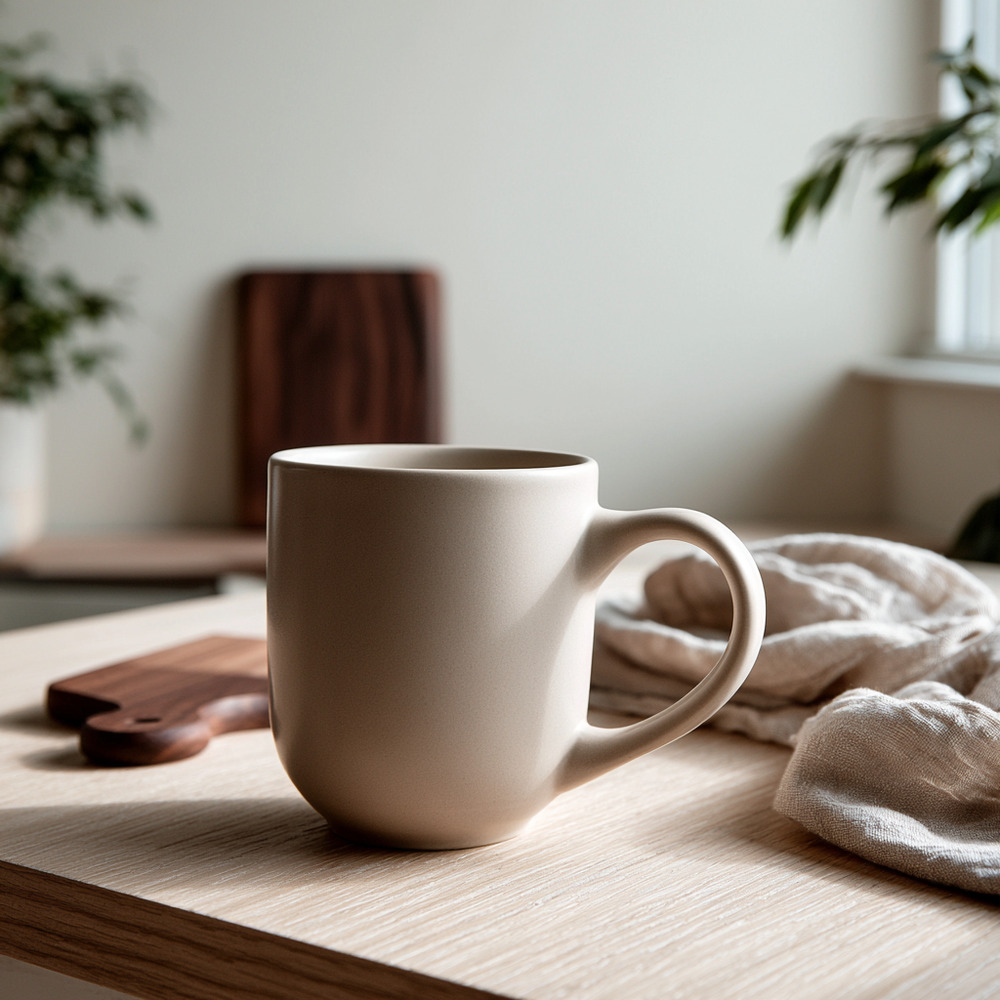
This is the one cup here that keeps the handle and the Western size — for the mornings you’re not ready to give up either.
It’s stoneware in a soft grey with a matte-leaning glaze, sold as a set of four. If the intro was about the oversized mug that holds a whole morning, this is that mug done in a Japandi color: no print, no slogan, just a muted grey that sits quietly on an open shelf. The matte surface and neutral tone are what pull a familiar large mug toward calm rather than clutter.
What I like: The grey is genuinely neutral — no blue or green cast — which is rarer than it sounds in a mass-market mug. As a set of four in one tone, it quietly retires a cupboard of mismatched promotional cups.
Who it’s for: If you like a handle and a generous pour and aren’t trying to convert to small tea cups, start here — the calmest version of the mug you already reach for.
2. EMBERHOLD Handleless Ceramic Cup, Beige — The Pure Everyday Cup
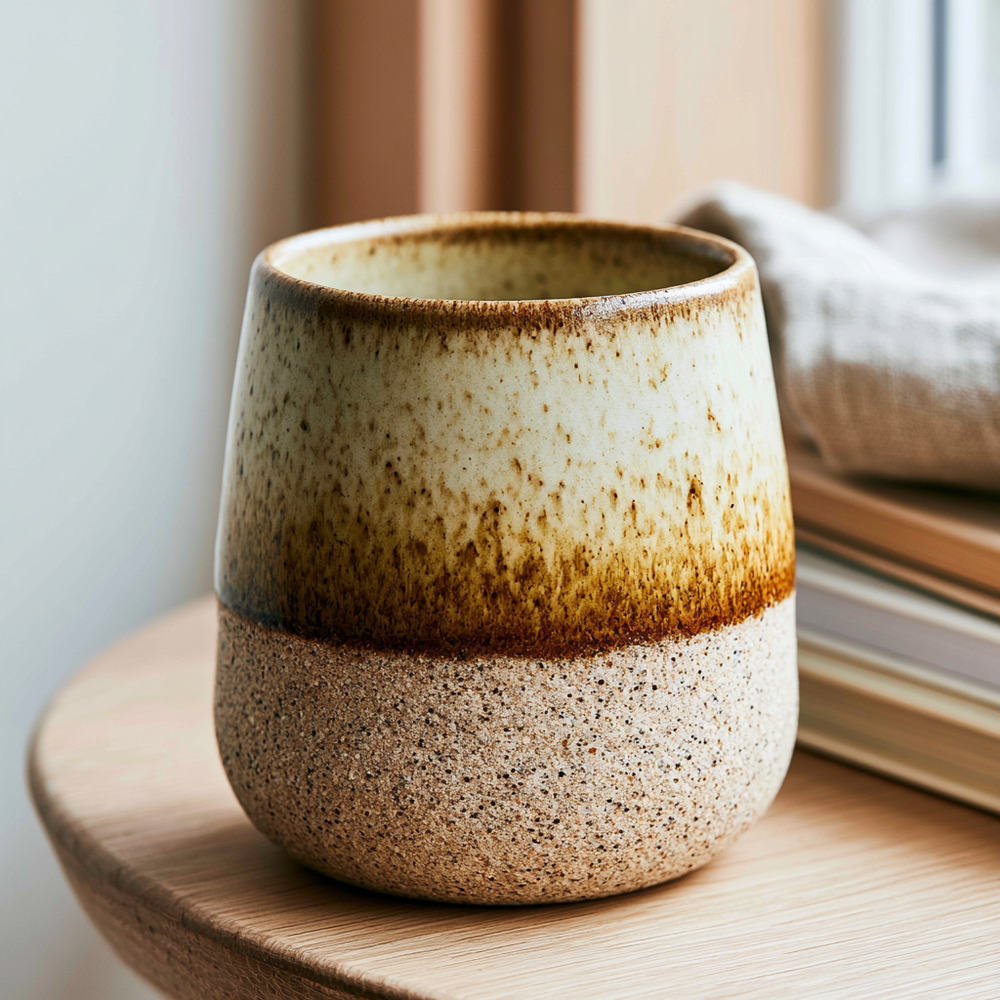
If the grey mug is the familiar starting point, this is the first real step toward a Japanese cup.
It’s a small handleless stoneware cup, around 8 ounces, glazed a soft beige on top and left as raw, unglazed clay along the bottom third. That two-tone line — smooth glaze above, bare sandy clay below — is the whole design, and it’s a deeply Japandi move: the material is allowed to show itself rather than being hidden under a single even coat. With no handle, you hold it lower and warmer, and you tend to finish it before it cools.
What I like: The undyed clay base sits squarely in the palette, and the lightly speckled glaze adds texture without a single line of pattern. From a design perspective, a cup this size changes the pace of a drink the way a large handled mug never does.
Who it’s for: Best if you want one honest, modern handleless cup — Japanese in shape rather than in print — for tea, coffee, or a small everyday pour.
3. EMBERHOLD Handleless Ceramic Cup, Midnight Blue — The One Indigo Note
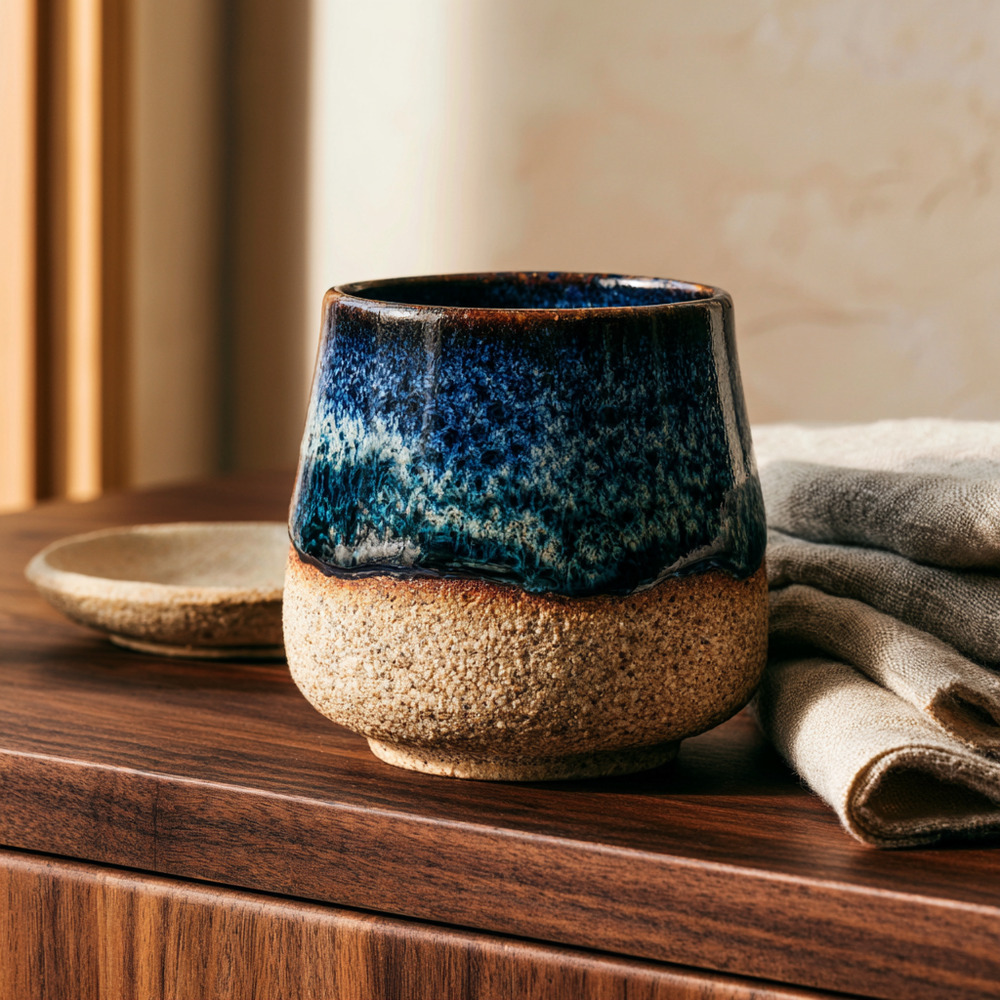
It’s the same honest, two-tone cup as the beige — this time in the one color a Japandi shelf can actually carry.
The glaze is a deep midnight blue over the same bare-clay base, and that depth is the point. Japandi leans on a single restrained indigo the way traditional Japanese ai dye does — one grounding note against a room of neutrals, never a whole theme. A pale shelf of beige and grey cups can start to feel washed out; one cup this color anchors the group.
What I like: A deep indigo is one of the few “colors” that belongs fully in a Japandi palette. Set against the raw clay base, the blue reads as considered rather than bright.
Who it’s for: Reach for this if your cups are all neutral and the shelf needs one quiet point of color — or if you simply prefer the indigo to the beige.
4. Blomus SABLO Handleless Stoneware Set (Set of 4) — The Set for Guests
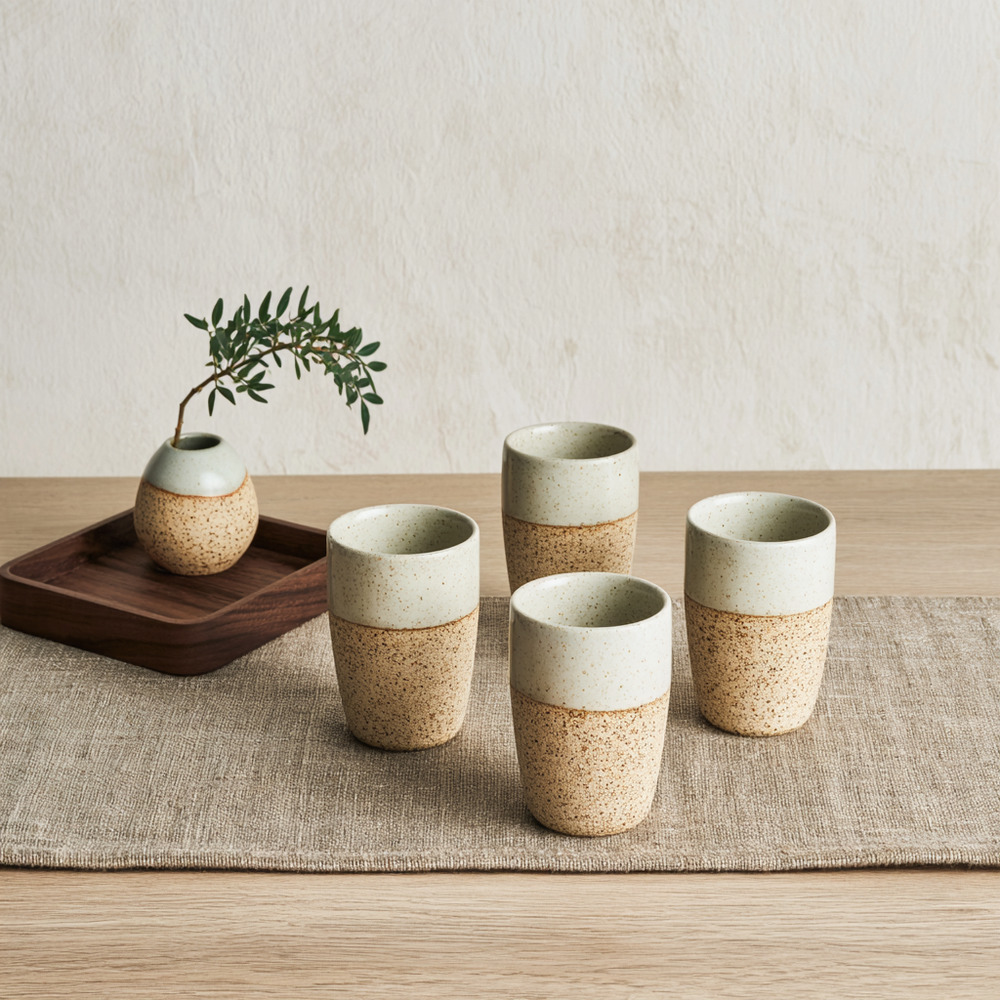
A single cup is for you. This set is for the way a Japandi home receives people.
Designed by blomus in a colorway called Cloud, it’s a set of four handleless stoneware cups — glazed a soft grey-white on top, left as raw speckled clay below. It’s the same honest two-tone idea as the EMBERHOLD cups, in a heavier, more considered piece. There’s a quiet mottainai logic to buying one good set once and keeping it for years rather than accumulating mugs by accident. Handleless and tonal, it serves a low table without cluttering it.
What I like: A matched set in one restrained tone does for a table what one good blanket does for a sofa — it makes the whole setting feel intentional. The glazed-to-raw transition gives each cup texture while keeping the group calm.
Who it’s for: For the person who’d rather own one quiet set for years than a cupboard that fills by accident — and anyone who serves tea or coffee to guests and wants the table to stay still. It’s the premium piece here, and the one built to be kept.
5. EMBERHOLD Ribbed Ceramic Cup, Greenish-Gray — Texture, and the Smallest Pour
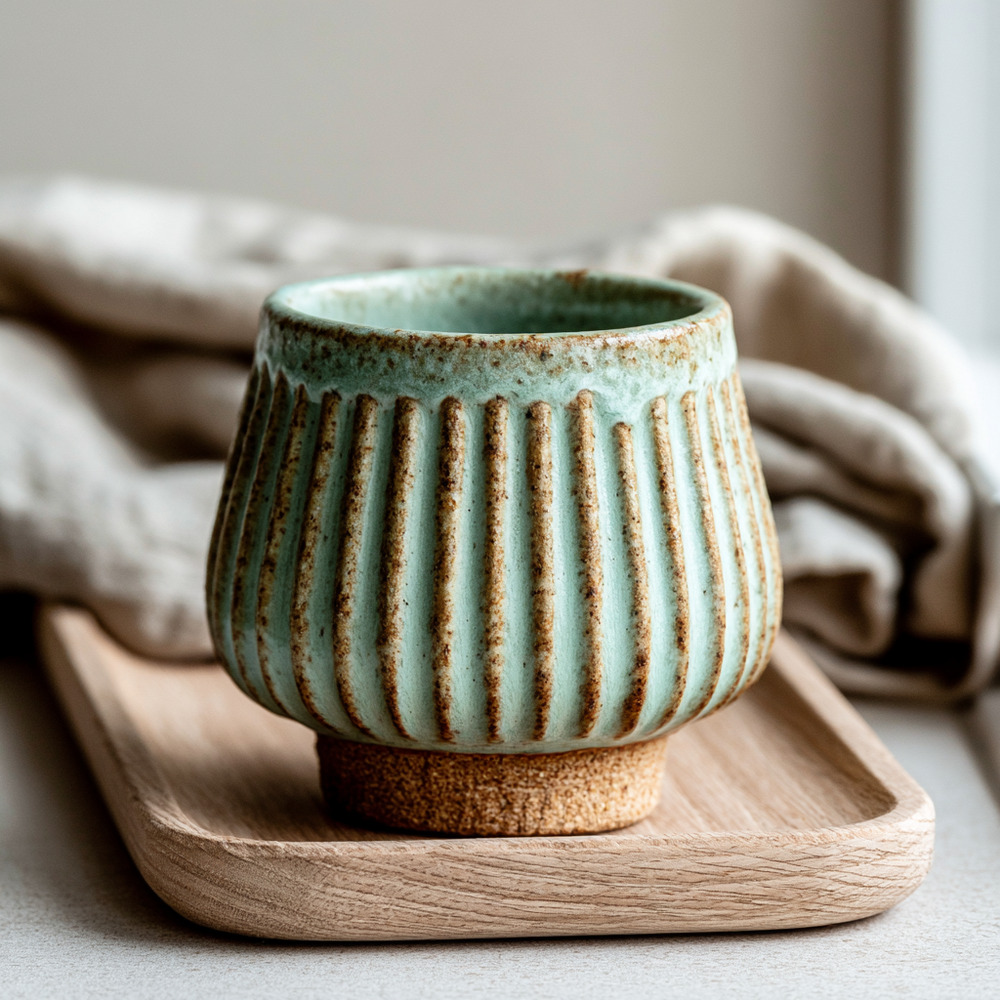
The last one earns its place on texture — and on being the smallest cup here, which is the whole idea.
It’s a handleless stoneware cup, around 6 ounces, in a muted greenish-gray, its sides formed into vertical ribs with a kiln-fired finish that shifts tone down each flute. The ribbing is the boldest detail on this list while staying completely neutral — texture instead of pattern, exactly how a Japandi object is supposed to hold interest. And its smallness is a feature: a cup this size is finished warm and refilled often, which is the rhythm a slow morning wants.
What I like: The fluted surface catches light the way a flat glaze can’t, and the greenish-gray is muted enough to stay in the palette. A small, low cup like this is also the most versatile — tea, espresso, or a short pour of anything.
Who it’s for: The one to choose if you drink small and often, or want the most texture in the smallest, quietest form. If buying fewer, better things is your instinct, it’s the mottainai pick.
Which One Should You Choose?
A quick guide:
- The familiar mug, in a calm color: Elanze Grey Matte Stoneware (Set of 4)
- The pure everyday handleless cup: EMBERHOLD Beige
- One quiet note of indigo: EMBERHOLD Midnight Blue
- A considered set for guests: Blomus SABLO Handleless Set
- Texture and the smallest pour: EMBERHOLD Ribbed Greenish-Gray
One More Thing About Cups in a Japandi Home
The cups above are objects. What makes them work in a Japandi morning is how you hold them.
The temptation is to buy the biggest mug — the one that holds the whole morning so you never have to get up. But a smaller cup, held in two hands and refilled when it’s empty, gives the morning a shape: a pause to stand, a moment at the counter, a second pour. The empty cup matters as much as the full one.
Warmth, like everything in a Japandi home, means more when you have to return to it.
Choose one. In real ceramic, in a quiet color, small enough to finish warm. Let the refill be the pause.
Because the best cup in a home isn’t the one that holds the most. It’s the one your hands close around without thinking, at the slow start of the day — the small, warm place where the morning actually begins.
Frequently Asked Questions
What material is best for a Japandi mug?
Fired ceramics are the key marker — stoneware or porcelain with a genuine glaze, and ideally a band of raw, unglazed clay left visible. These carry real weight and age honestly. It’s best to avoid double-wall plastic, printed novelty mugs, and high-gloss primary colors, which tend to read as packaging rather than craft.
What colors work for a Japandi cup?
Earthen, muted tones: off-white, beige, warm grey, and charcoal, with at most one deep indigo as an accent. Bright enamel, slogans, and decals pull a cup away from Japandi quickly. In a neutral palette, the glaze and texture provide the visual interest instead.
Do Japandi tea cups need handles?
Not necessarily. A handleless cup — the form of a traditional Japanese yunomi — is one of the most familiar everyday Japanese cup forms, and it naturally slows a drink down, since you hold it lower and wait for it to cool enough to grip. A low, close-handled mug works too. The shape to avoid is the tall café tumbler, which reads more coffee-chain than calm.
How many cups does a Japandi kitchen need?
Fewer than most cupboards hold. One honest everyday cup, plus a small set for guests, covers most of it. Japandi works through restraint, so a few well-chosen cups used daily do more than a drawer of mismatched mugs collected by accident.
As an Amazon Associate I earn from qualifying purchases. All opinions are my own.