This post contains affiliate links. As an Amazon Associate, I earn from qualifying purchases.
When the evenings turn cold, the instinct in a lot of homes is to add more — another fleece, a heavier throw, a pile of soft things in cabin colors draped over every surface.
A Japandi winter goes the other way. It asks for one warm layer, chosen well, in a natural fiber and a quiet color, left where you actually reach for it.
I wrote recently about the coldest house I ever loved — a home that heated a single room, where one warm corner mattered precisely because it wasn’t spread thin across the whole house. A blanket works the same way. You don’t need a heap of them. You need one soft thing that’s worth crossing the room for.
So this isn’t a list of the coziest blankets on Amazon. It’s a list of five that stay warm and stay quiet — the ones that still look like Japandi when the season is loudest. All five are on Amazon. All five are here for a reason.
Why Trust This Guide?
I’m Japanese, and I write about Japandi from the cultural side rather than the trend side. These selections are based on fiber, weave, color, and how each blanket fits a Japandi room — not on sponsored placements, popularity lists, or paid recommendations.
At a Glance
| Blanket | Best For |
|---|---|
| Bedsure Cotton Waffle | All-season, every room |
| MINUPWELL French Flax Linen | The pure-linen base layer |
| Biddy Murphy Irish Mohair & Wool | A lifelong heirloom throw |
| Superfine Alpaca Throw | Lightweight warmth, a quiet color |
| YnM Chunky Knit Cotton | Texture and a calming weight |
What Makes a Throw Blanket Actually Japandi?
Before the list, the filter I use — because most of the blankets sold for “cozy season” are exactly what a Japandi room doesn’t want.
A Japandi blanket decorates through texture, not color. The weave does the work, so the palette doesn’t have to.
Here’s what I look for:
Fiber: Natural materials — linen, wool, cotton, alpaca, mohair. Not polyester fleece, not sherpa, not faux fur. Synthetic “minky” blankets read as cabin, not calm.
Color: Undyed or muted. Oat, sand, warm white, charcoal — with at most one quiet indigo or brown as an accent. No bright colors, no plaid, no tartan.
Texture: Honest, visible weave. A waffle, a herringbone, a loose flax, a chunky knit. In a neutral room, the texture is the pattern.
Restraint: One good blanket per room, not a pile. A single layer left in the right place says more than five folded for show.
With that in mind — here are five that pass.
The 5 Best Throw Blankets for a Japandi Winter
1. Bedsure Cotton Waffle Blanket — The All-Season Starting Point
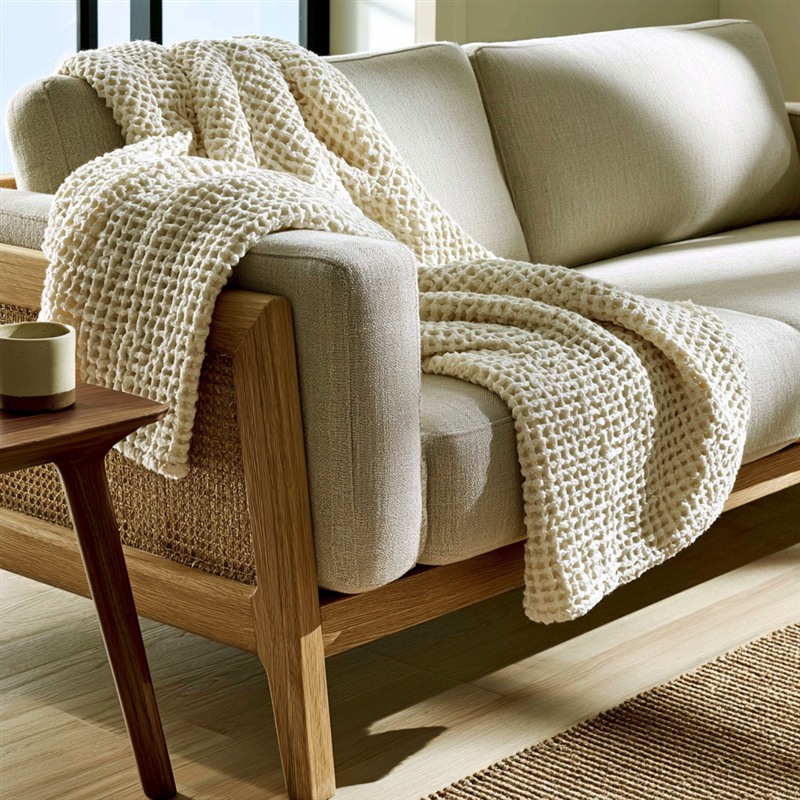
If you only own one blanket, this is the kind I’d start with.
It’s 100% cotton in a waffle weave, in a plain off-white. The waffle structure is the whole point: it adds visible, gridded texture without a single line of pattern or a drop of color — which is exactly how a Japandi blanket is supposed to decorate, through weave rather than print. Cotton breathes naturally and washes without ceremony, and it’s the fiber I’d reach for year-round because it warms without the heat-trapping density of wool.
What I like: The neutral off-white sits squarely in the palette, and the texture means it never reads as flat or boring despite having no design at all. Based on the listed material, it’s an easy all-season layer rather than a deep-winter-only one.
Who it’s for: If you’re buying your very first Japandi throw, this is where I’d start — versatile, easy on the budget, and at home in any room or season, including warmer climates where a heavy wool throw would be too much.
2. MINUPWELL French Flax Linen Blanket — The Pure-Linen Base
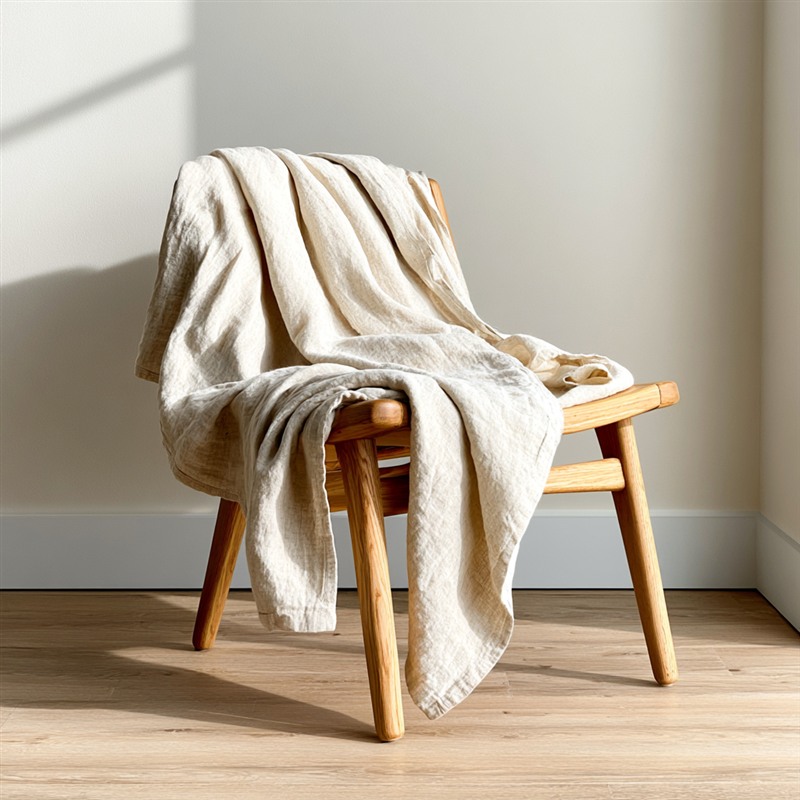
If the waffle blanket is the safe starting point, linen is the one I’d build a room around.
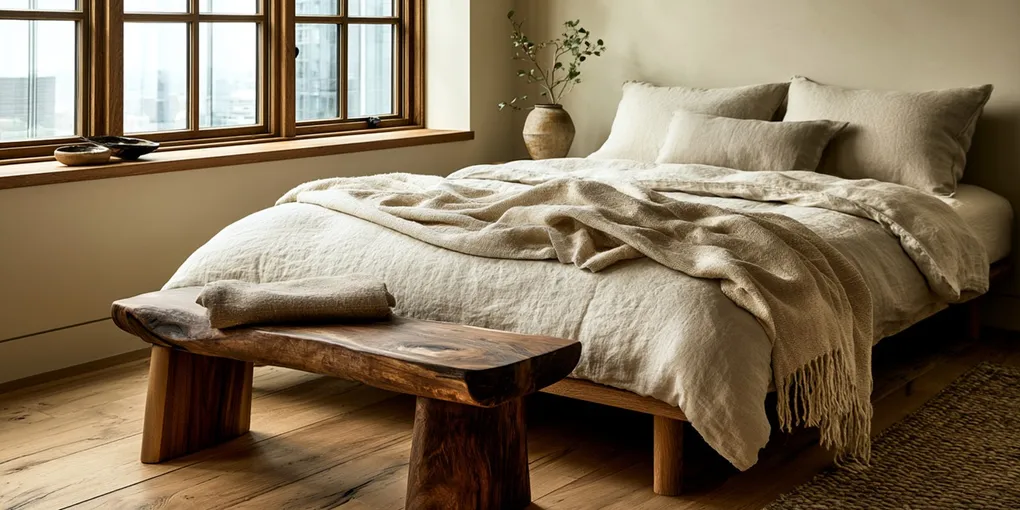
This is 100% French flax linen in its natural, undyed color. Linen tends to feel cool and breathable and softens the more it’s washed, which is why it reads as an all-season fiber rather than a winter-only one. The slightly rumpled, lived-in drape of flax is not a flaw to iron out — it is the look, the same quiet imperfection Japandi prizes elsewhere.
What I like: The undyed flax color is as Japandi as a fabric gets, and linen’s natural texture does the decorating on its own. From a design perspective, it layers beautifully over a bed or a sofa without ever looking styled.
Who it’s for: Best if you want something that stays on the sofa all year instead of disappearing every spring — and the most honest natural-fiber option on this list.
3. Biddy Murphy Irish Mohair & Wool Throw — The Heirloom
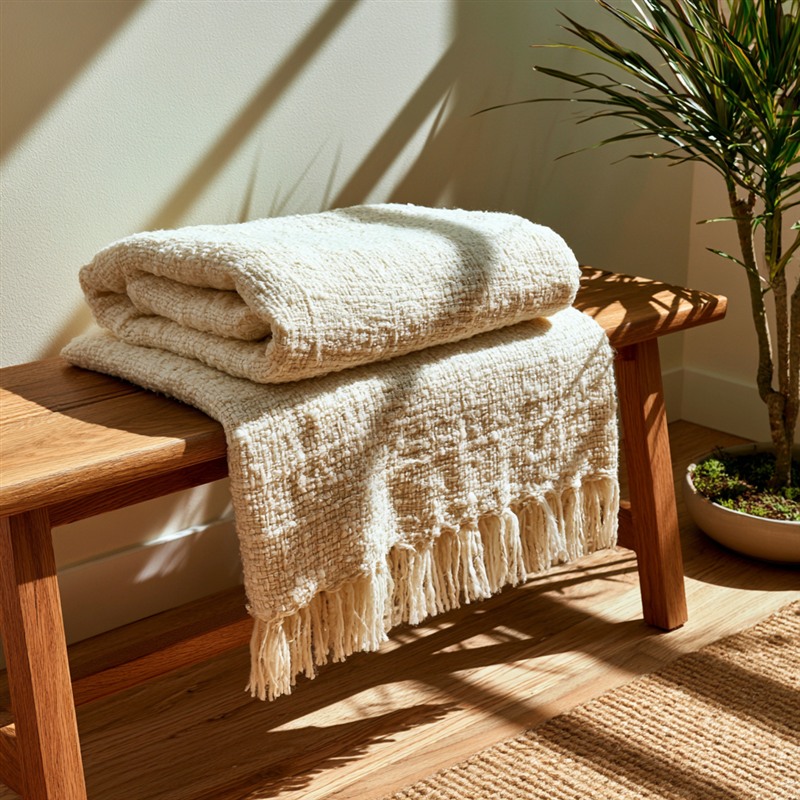
This is the one you buy once and keep for twenty years.
It’s a mohair-and-wool blend woven in County Tipperary, Ireland, by a mill that’s been at it since 1892, offered in a reversible natural white. Wool and mohair are commonly associated with genuine warmth and longevity — and a throw made this way isn’t a seasonal purchase so much as a long one. That fits the idea of mottainai: choosing something well-made and keeping it, rather than replacing a cheaper version every few winters.
What I like: The heritage construction and natural white colorway make it feel considered rather than trendy. This is the blanket on the list built for real cold — and, based on the materials, for decades of it.
Who it’s for: For the person who’d rather buy once and keep it twenty years than replace a cheaper throw every few winters. This is the one built for real cold — not just the look of it. If buying fewer, better things is your instinct, it’s the mottainai pick.
4. Superfine Alpaca Throw — The Quiet Color Note
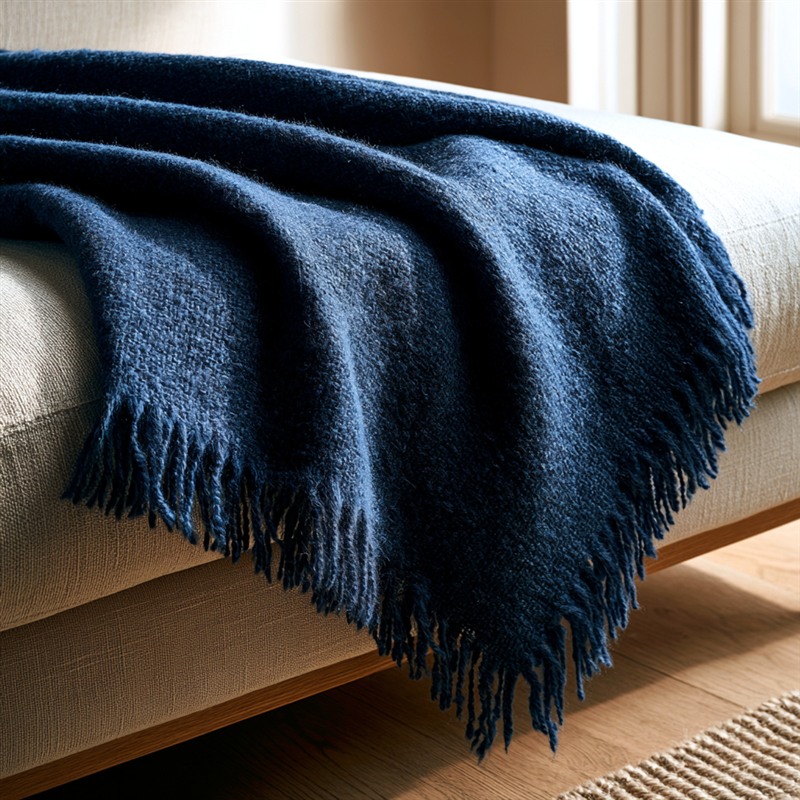
Every other blanket on this list is a neutral. This is where I’d allow exactly one note of color.
It’s a superfine Peruvian alpaca and merino wool throw, lightweight, in a solid denim blue. Alpaca is often valued for being warm without much weight, which makes it an easy layer to keep over a chair or the end of a bed. The denim-blue colorway works the way Japandi uses blue — as a single, restrained indigo accent rather than a theme. (It also comes in several neutral colorways if you’d rather keep the whole room undyed.)
What I like: A quiet indigo is one of the few colors that belongs in a Japandi palette, echoing traditional Japanese ai (indigo) dye. Based on the listed fiber, it offers warmth at a low weight — useful for layering without bulk.
Who it’s for: Reach for this if you want warmth without weight, plus a single deliberate note of color — and if you’re styling a shelf or a shop-style grid of textiles, it’s the piece that keeps an all-neutral lineup from going flat.
5. YnM Chunky Knit Cotton Blanket — Texture With Weight
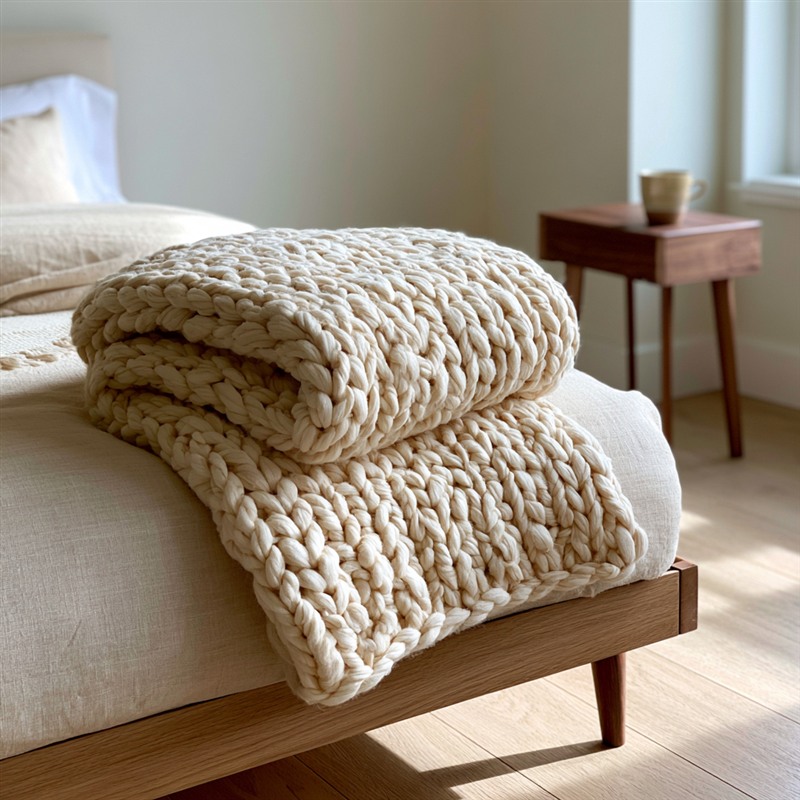
The last one earns its place on texture — and on something the others don’t have: weight.
It’s a handmade chunky braided knit in 100% cotton, in cream white, where the weight comes from the density of the yarn itself rather than glass beads sewn inside. The open loops of the knit let air move through it, so all that chunky structure adds bold visual texture and a gentle, settling weight without trapping much heat — and it comes in neutral colorways including oatmeal and charcoal.
What I like: The braided knit is the boldest texture here while staying completely neutral — the kind of quiet statement a Japandi room can carry. A natural-fiber weighted blanket also fits the season in a deeper way: in the busiest, loudest months, a calming weight is its own kind of rest.
Who it’s for: The one to choose for a sculptural, textural anchor on a sofa or bed — especially if the steady pressure of a weighted blanket is what settles you at the end of a long day.
Which One Should You Choose?
A quick guide:
- One versatile blanket for any room, any season: Bedsure Cotton Waffle
- A pure natural base you’ll keep for years: MINUPWELL French Flax Linen
- Real winter warmth and an heirloom: Biddy Murphy Irish Mohair & Wool
- Lightweight warmth plus one quiet touch of color: Superfine Alpaca Throw
- Texture and a calming weight: YnM Chunky Knit Cotton
One More Thing About Blankets in a Japandi Home
The blankets above are objects. What makes them work in a Japandi room is how few of them there are.
The temptation in winter is to collect — a different throw for every chair, a basket overflowing with soft things. But a room with one beautiful blanket, left where you actually sit, feels calmer than a room buried in five. The empty arm of the sofa matters as much as the blanket on it.
Warmth, like everything in a Japandi room, means more when there’s less of it competing for your attention.
Choose one. In a natural fiber, in a quiet color. Leave the rest of the room bare around it.
Because the best blanket in a home isn’t the one a guest notices first. It’s the one your hand finds without looking, at the cold end of the evening — the small, warm place where the winter actually gets lived.
Frequently Asked Questions
What fabric is best for a Japandi throw blanket?
Natural fibers are the key marker — linen, wool, cotton, alpaca, or mohair. These age well, carry real texture, and look honest in a neutral room. It’s best to avoid polyester fleece, sherpa, and faux fur, which tend to read as cabin or nursery rather than calm.
What colors work for a Japandi blanket?
Undyed and muted tones: oat, sand, warm white, and charcoal, with at most one quiet indigo or brown as an accent. Bright colors, plaid, and tartan patterns pull a room away from Japandi quickly. In a neutral palette, the weave of the fabric provides the visual interest instead.
How many throw blankets does a room need?
Usually one. Japandi works through restraint, so a single well-chosen blanket left where you actually use it does more than a pile folded for display. A second throw in a different room is fine — a stack of them in one room is not.
Linen or wool — which should I choose?
Linen tends to feel cool and breathable and works across all four seasons, which makes it a good year-round base. Wool, alpaca, and mohair are more insulating and commonly chosen for genuine winter warmth. If you want one blanket for the whole year, linen or cotton; if you want one specifically for cold evenings, wool or alpaca.
As an Amazon Associate I earn from qualifying purchases. All opinions are my own.