This post contains affiliate links. As an Amazon Associate, I earn from qualifying purchases.
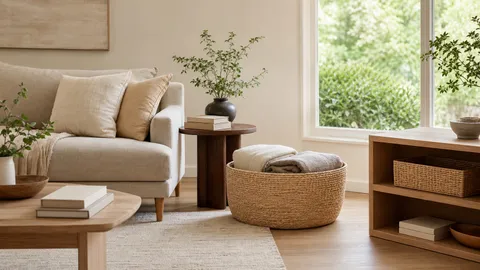
In a Japandi room, almost everything is hard.
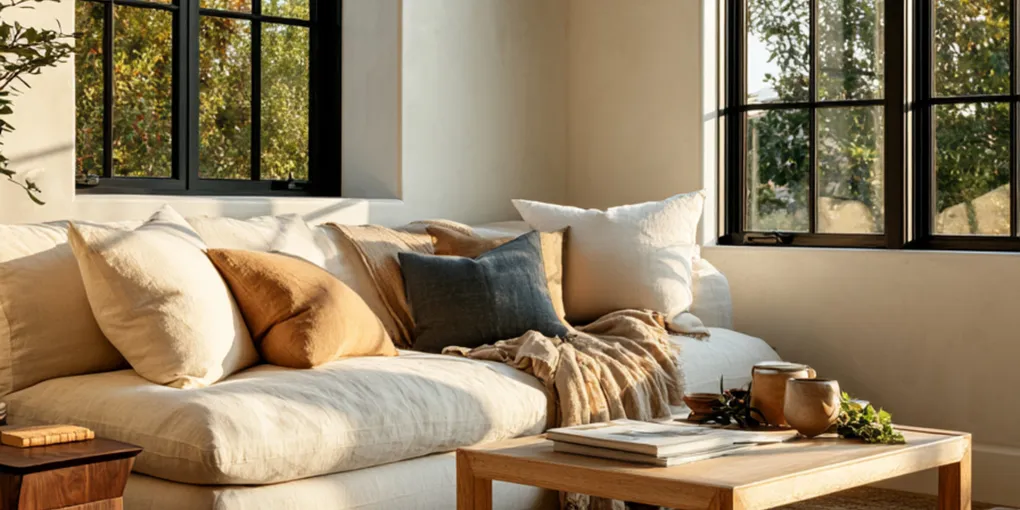
Wood floors. Ceramic vessels. Stone coasters. A linen sofa with a structure you can feel. The materials are natural, grounded, tactile — but none of them are soft.
The rug is the exception. It is the only surface in the entire room that receives your bare foot with warmth.
That changes how a room feels to live in, not just how it looks in a photograph. A Japandi interior without a rug is a beautiful idea that is slightly cold to stand in. With the right rug, something settles — the room stops being a composition and starts being a place.
It’s also one of the most powerful moves a renter has: a large rug quietly covers the beige carpet you didn’t choose. If that’s your situation, renter-friendly Japandi covers the rest.
This article is about finding that rug. Not the one that looks most Pinterest-worthy, but the one that works.
Why Trust This Guide?
I’m Japanese, and I write about Japandi from the cultural side rather than the trend side. These selections are based on material, texture, colour, and how each rug functions within a Japandi room — not on sponsored placements, popularity lists, or paid recommendations.
At a Glance
| Rug | Best For |
|---|---|
| nuLOOM Rigo Jute | Texture-forward rooms that want natural warmth |
| Nakagishi Area Rug | Rentals and families who need washability |
| Beverly Rug Easy Jute | Indoor-outdoor and budget-conscious decorators |
| EARTHALL Woven Braided Rug | Natural-look washable rug for everyday rooms |
| JONATHAN Y Low-Pile | Clean, modern Japandi with easy care |
What Makes a Rug Actually Japandi?
Before the list, the filter I use — because plenty of rugs claim the aesthetic and miss the point.
Colour: Warm neutrals only. Natural linen, undyed jute, warm beige, soft taupe. Avoid cool greys, stark whites, and anything with a blue undertone. Japandi draws warmth from the Scandinavian side and restraint from the Japanese side — the result is oat, sand, driftwood, not ash.
One rule I often follow: choose a rug that is one tone lighter than your floor. A dark oak floor pairs with a warm linen rug. A mid-tone floor pairs with off-white or natural jute. The lightness lifts the room without breaking the calm.
Pattern: None, or close to none. A rug with a bold geometric print competes with the furniture for attention. Japandi rooms give every object space to breathe. If you want pattern, look for subtle texture — a woven stripe in tones so close together they read as one, or the natural variation of a hand-woven weave.
Material: Natural fibres where possible. Jute, sisal, cotton, wool. These age honestly — they develop character rather than looking worn out. Synthetic rugs that imitate natural fibre often work from a distance, but they lack the warmth and weight that makes a natural rug feel right underfoot.
Scale: Large enough to anchor the furniture. A rug that sits under the coffee table but not the sofa legs looks like an afterthought. In Japandi, the rug should ground the entire seating arrangement.
The 5 Best Japandi Rugs on Amazon
1. nuLOOM Rigo Jute Hand Woven Area Rug — The Natural Fibre Standard
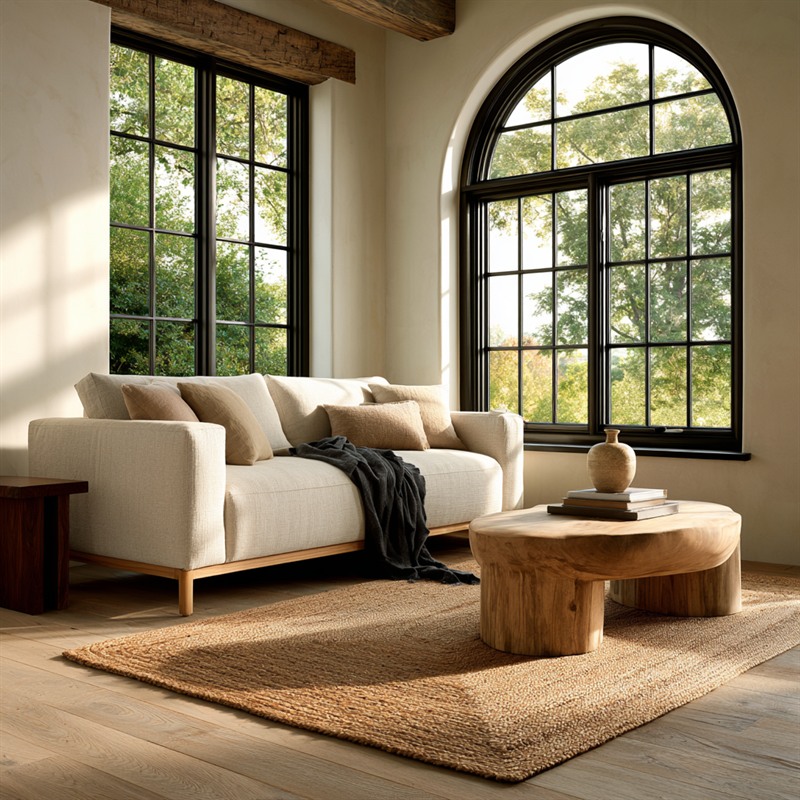
If someone asks me what a Japandi rug looks like at its most honest, I point to this one.
The Rigo is 100% jute, hand-woven in a simple braid pattern, and left in its natural undyed state. There is no colour applied, no pattern added — what you see is exactly what jute looks like when it is worked into a rug. The result is a surface with genuine visual warmth: the same category of material as a linen shade, a rattan basket, or an unfinished wood shelf.
The hand-woven construction means no two rugs are quite identical. There will be slight variations in the weave — not flaws, but the kind of natural irregularity that makes a material feel real rather than manufactured.
What I like: The material is genuinely honest. Jute in its natural state has a warm, golden-amber tone that sits well against both pale and mid-tone floors. In a room of ceramic, wood, and linen, it reads as another natural texture rather than a separate decorative element. It belongs there.
One honest thing to know: Jute, as a material, is not soft underfoot. If you are expecting cushioned warmth, jute generally won’t deliver it — it is closer in texture to a fine woven mat than a plush surface, and the weave is typically noticeable under bare feet. In a living room where you are sitting rather than walking, this is fine. In a bedroom where you step out in the morning expecting softness, it is the wrong choice.
Who it’s for: Living rooms and dining areas where you want maximum natural material authenticity. Not recommended for bedrooms.
2. Nakagishi Area Rug — The Practical Neutral
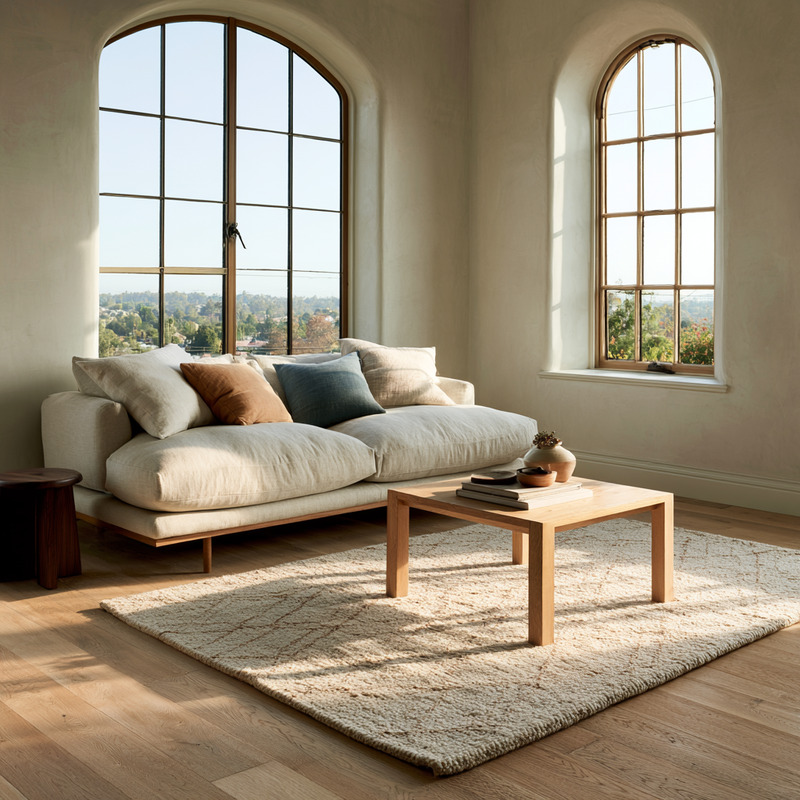
There is a version of Japandi that is beautiful in photographs and difficult to maintain in daily life. Pale, natural, minimal — and completely impractical the moment a coffee spills or a pet decides the rug is their personal territory.
The Nakagishi addresses this directly. It is a washable rug in a warm beige that sits cleanly within a Japandi palette, and it is designed to go into a standard washing machine. No special care instructions, no dry-cleaning, no anxiety about what happens when real life meets your carefully composed room.
The weave is flat and smooth — closer to a contemporary flatweave than a pile rug. The beige tone is warm rather than cold, which matters: a cool grey or stark white rug disrupts the earthy warmth that Japandi is built on.
What I like: The washability changes the psychology of the room. A rug you are afraid to mark becomes a source of low-level stress rather than comfort. A rug you can clean properly is something you can actually live with. This is closer to the Japanese seiketsu principle — cleanliness as something that is maintained, not just displayed.
Who it’s for: Homes with children, pets, or high foot traffic. Anyone who wants to maintain a Japandi aesthetic in a room that actually gets used.
3. Beverly Rug Easy Jute — The Accessible Option
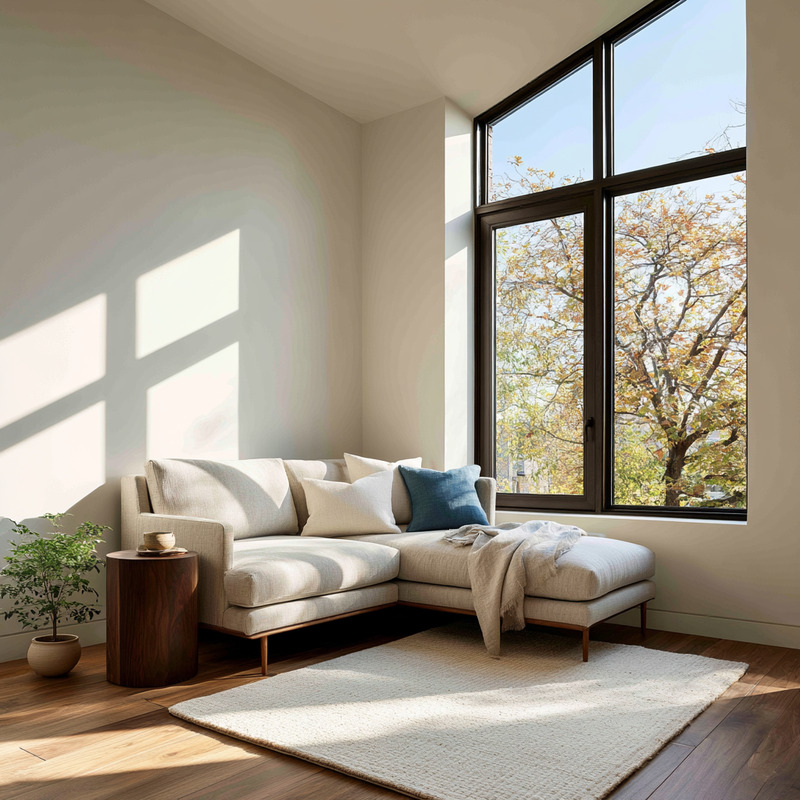
Not every rug in a home needs to be the considered purchase. Sometimes you need something that works in a specific spot — a covered patio, a mudroom entry, a secondary bedroom — without requiring the same level of commitment as the main living room rug.
The Beverly Easy Jute is an off-white polypropylene rug designed to work both indoors and outdoors. The jute-look weave gives it the visual warmth of natural fibre without the weight and maintenance requirements of actual jute. It can be hosed down. It handles moisture. For covered outdoor areas or entry zones, that practicality is significant.
Visually, the off-white tone is slightly brighter than natural undyed jute, which makes it a good choice for darker floors where you want the rug to add genuine lightness to the space.
What I like: The indoor-outdoor capability opens up parts of the home that often get overlooked in Japandi planning. An entryway is not just a functional space — in Japanese design, it is the genkan, the transition zone between outside and inside. A rug at that threshold that handles real outdoor-to-indoor traffic without looking or acting like a utility mat is genuinely useful.
Who it’s for: Covered patios, entryways, mudrooms, or any spot where durability matters as much as appearance.
4. EARTHALL Woven Braided Rug — Natural Texture That Can Be Washed
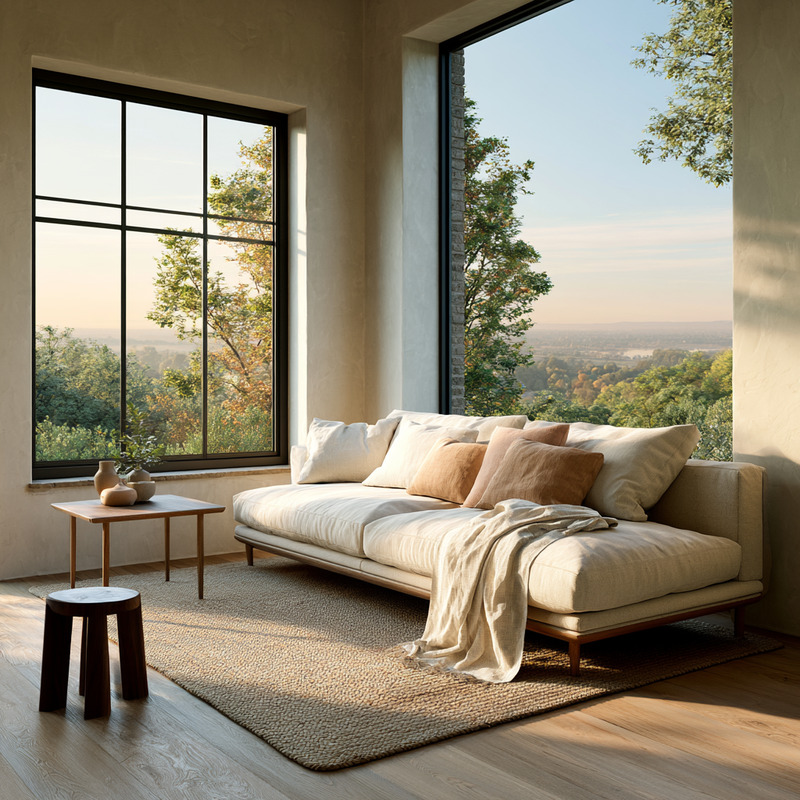
The nuLOOM jute rug earlier in this list is the more honest natural material — but it cannot be machine washed, and it is not soft underfoot. The EARTHALL sits in a different position: it gives you the visual warmth of a woven natural-look surface, with the practical reality of a rug you can actually clean.
The Beige/Ivory colourway blends soft ivory with warm beige — a tone that reads as natural without being as golden or textured as undyed jute. The braided construction gives the surface some visible structure, so the rug has presence without pattern. At 0.19 inches thick, it sits flat and stays out of the way of doors and furniture legs.
It is cotton and polyester rather than pure natural fibre, which is the trade-off. But the rubber dot backing keeps it in place on hardwood floors, and the machine-washable construction means it can live in a room that actually gets used.
What I like: This is the version of natural-look texture that works in a household where a jute rug would quickly show every mark and couldn’t be cleaned. The Beige/Ivory tone is lighter than the floor in most mid-tone wood interiors, which follows the one-tone-lighter rule without requiring any calculation.
Who it’s for: Anyone who wants the warm woven look of a natural rug but needs washability — families, pet owners, or anyone whose main living space is high-traffic.
5. JONATHAN Y Low-Pile Minimalist Rug — The Clean-Line Choice
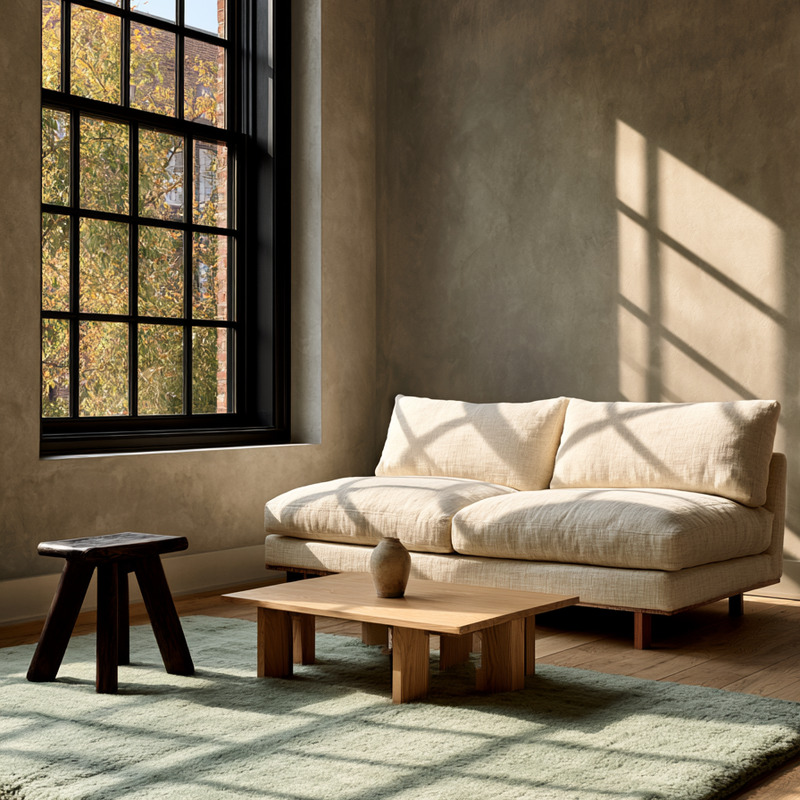
There is a particular kind of Japandi room that is defined by precision rather than texture: clean lines, very little visual noise, furniture with straight dark legs, surfaces that are smooth rather than woven. In that kind of room, a heavily textured jute rug can feel like a contradiction.
The JONATHAN Y low-pile rug is the right match for that version of the aesthetic. Its low profile means it sits flat and reads as a surface rather than an object — the eye moves over it rather than stopping at it. The minimalist design keeps the palette controlled.
It is also washable, which addresses one of the practical realities of low-pile rugs: they show marks more clearly than pile rugs, and need to be cleaned more frequently.
What I like: The low pile creates a particular kind of visual cleanliness. In a room where every line is deliberate, a rug that lies flat and stays quiet is the right choice. It anchors the furniture without competing with it.
Who it’s for: Anyone building the more structured, line-conscious version of Japandi — think walnut furniture with straight legs, simple ceramics, a room where the architecture is doing most of the work and the rug should not interrupt it.
Which One Should You Choose?
- Want pure natural material authenticity: nuLOOM Rigo Jute
- Need washability for real daily life: Nakagishi or EARTHALL Woven Braided
- Working with an entryway or outdoor-adjacent space: Beverly Easy Jute
- Want natural texture that’s also washable: EARTHALL Woven Braided
- Building a clean-line, structured Japandi room: JONATHAN Y Low-Pile
One More Thing About Japandi Rugs
The rug question in Japandi is often treated as a styling detail — the final layer after the furniture has been chosen. I think it is worth treating it differently.
A rug defines the zone. In an open-plan American home, there are often no walls to define where the living area ends and the rest of the space begins. The rug does that job. It says: this is where the sitting happens, this is where the pause is.
That is a Japanese idea without the Japanese vocabulary. Ma — the concept of intentional space — is not just about leaving gaps. It is about making the boundaries of a space legible. The rug draws the boundary.
And there is the texture itself. After a day of hard surfaces — concrete pavements, office floors, car seats — the moment of stepping onto a woven surface at home carries weight. It is the foot that notices, before the eye.
Choose the rug for the foot first. The room will take care of itself.
Frequently Asked Questions
What colour rug works best in a Japandi room?
Warm neutrals — natural jute, undyed linen tones, warm beige, and soft taupe — tend to work best. The key is to choose a rug that is one tone lighter than your floor, which lifts the room without disrupting the calm. Cool greys and stark whites can work, but they can sometimes push the room toward a Scandinavian aesthetic rather than the warmer Japandi balance.
Can jute rugs work in a bedroom?
Jute is a good material for visual warmth, but it is coarser underfoot than many people expect. In a living room where you are primarily seated, this is usually fine. In a bedroom where the first sensation of the morning is bare feet on the floor, jute can feel abrasive. A lower-pile or flatweave rug in a softer material tends to suit bedrooms better.
How big should a rug be in a Japandi living room?
Large enough to anchor the entire seating arrangement — ideally with the front legs of the sofa and chairs sitting on the rug rather than just the coffee table. A rug that is too small looks like an afterthought. In Japandi, the rug grounds the furniture grouping and defines the zone, so sizing it generously is usually the right choice.
Should a Japandi rug have pattern or be plain?
Both can work, but the pattern needs to be very quiet. A solid rug in a warm neutral is the easier choice. If you want pattern, look for subtle tone-on-tone texture — a stripe in closely matched neutrals, or the natural variation in a hand-woven weave. Bold geometric patterns or high-contrast designs tend to pull the eye away from the rest of the room, which disrupts the Japandi balance.
As an Amazon Associate I earn from qualifying purchases. All opinions are my own.